

Contact Us
lf you have any queries, get in touch today! Don't hesitate, We try to take the extra step forour customer satisfaction.
"
Our certificate
Possess 800 square meters of Class 10,000 dust-free workshop, Passed ISO9001:2015 quality management system certification and ISO13485:2016 medical device quality management system, and its products have obtained multiple biocompatibility tests, US FDA and EU LFGB certifications.
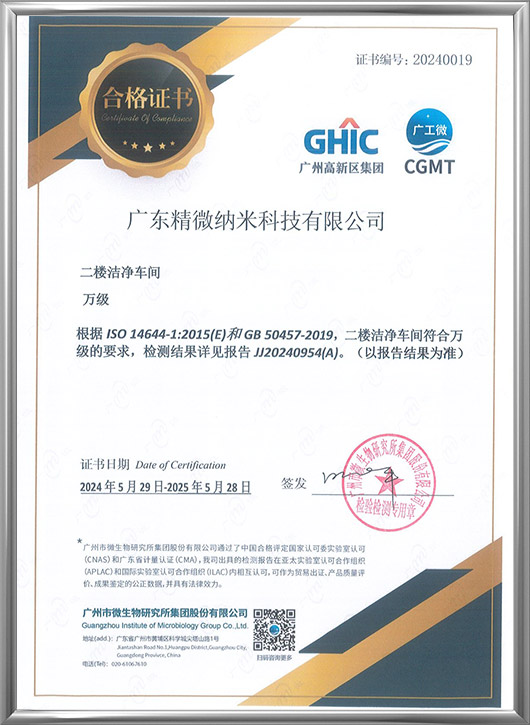
Class 10,000 cleanroom certification
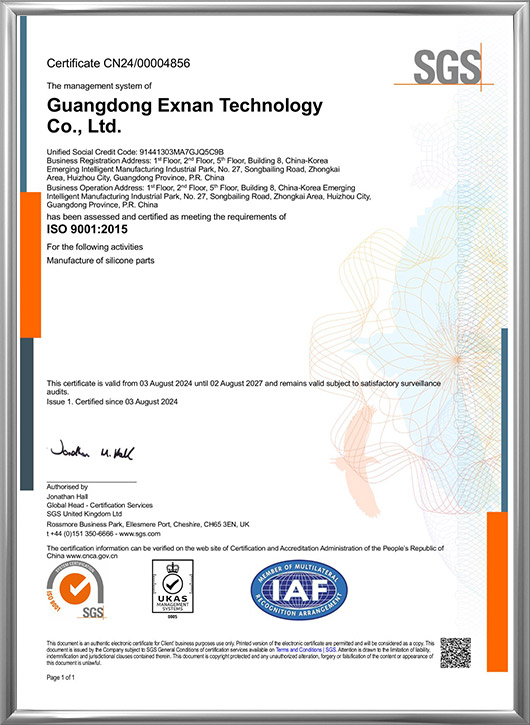
ISO 9001:2015
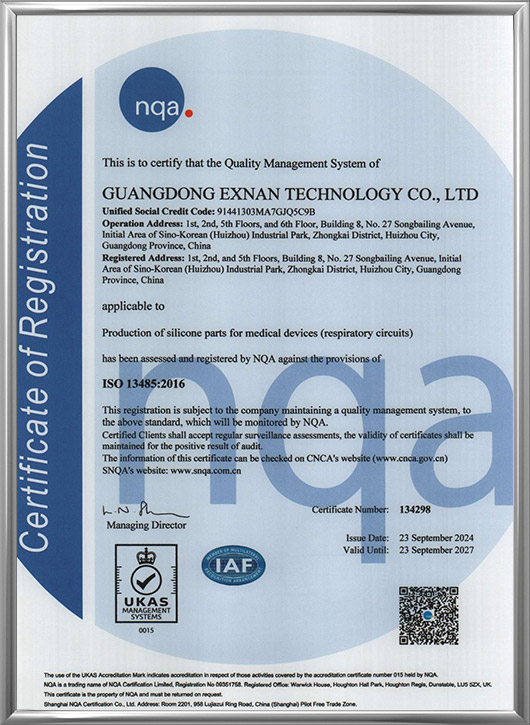
ISO 13485:2016
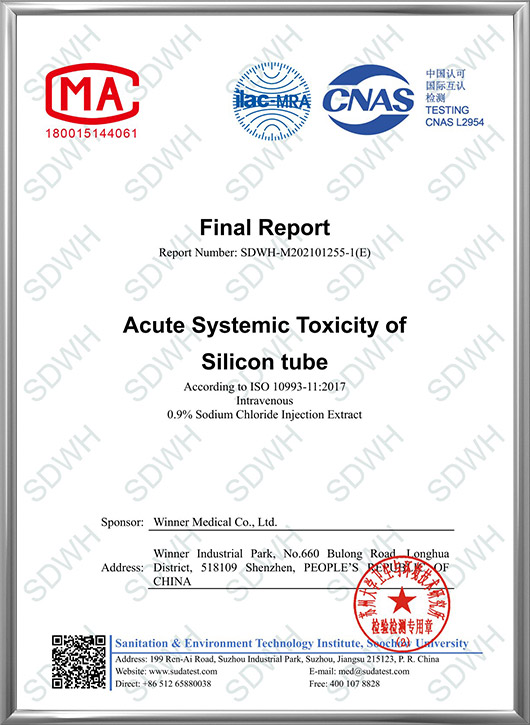
ISO 10993-11:2017 Tail vein injection
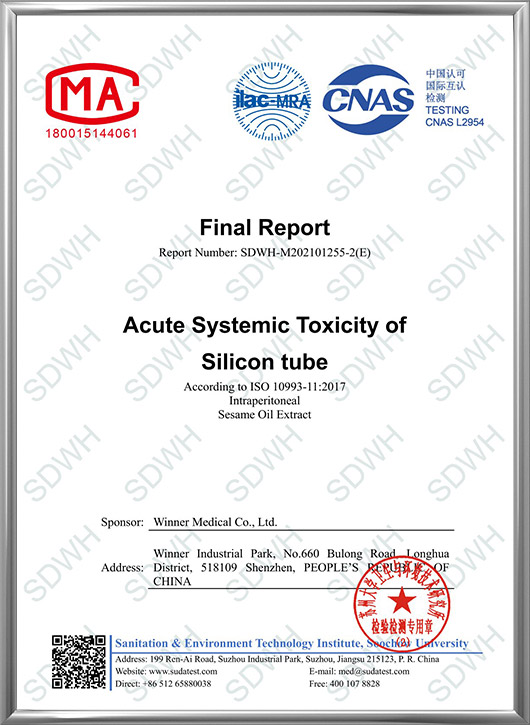
ISO 10993-11:2017 Intraperitoneal injection
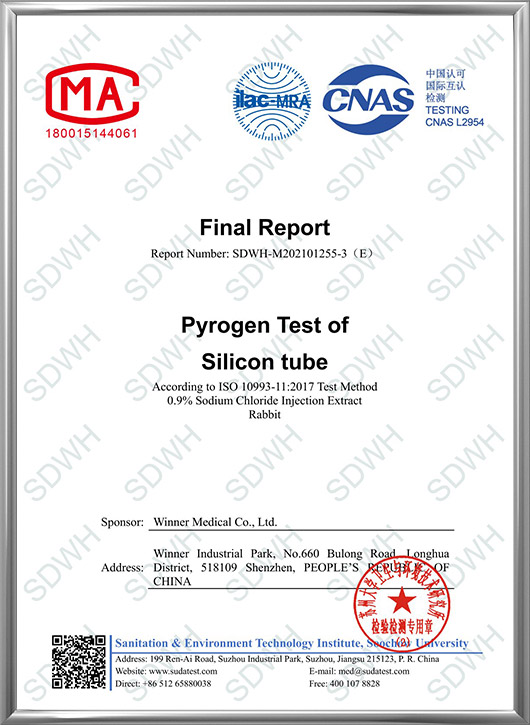
ISO 10993-11:2017 Pyrogens
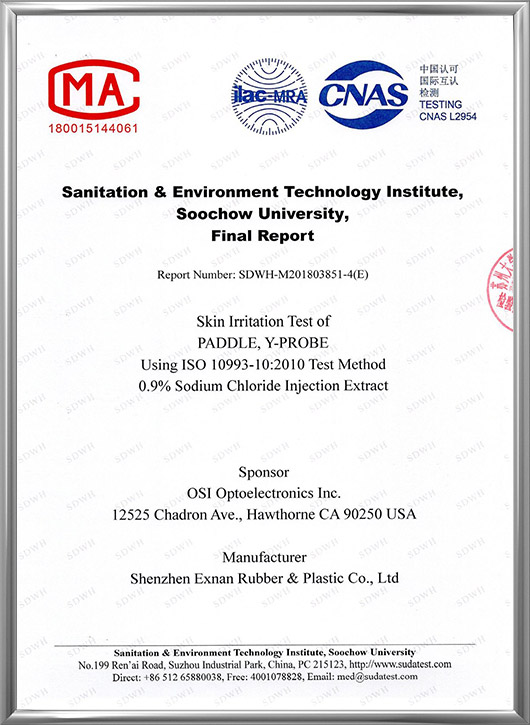
Skin irritation test for extract of 0.9% sodium chloride injection
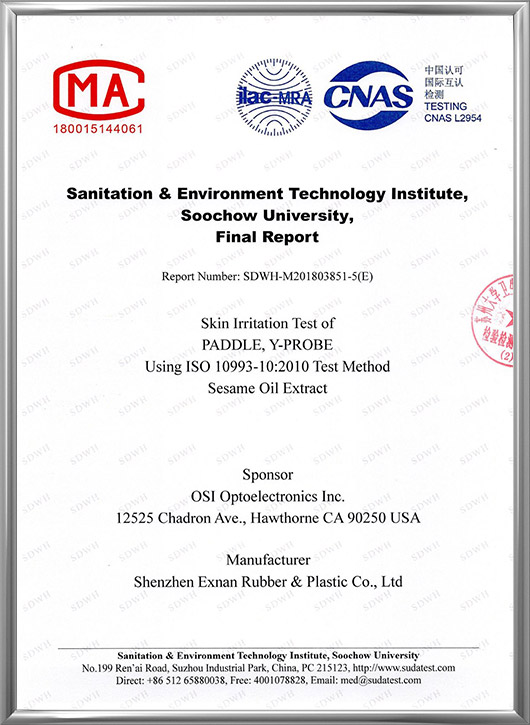
Skin irritation test for sesame oil extraction
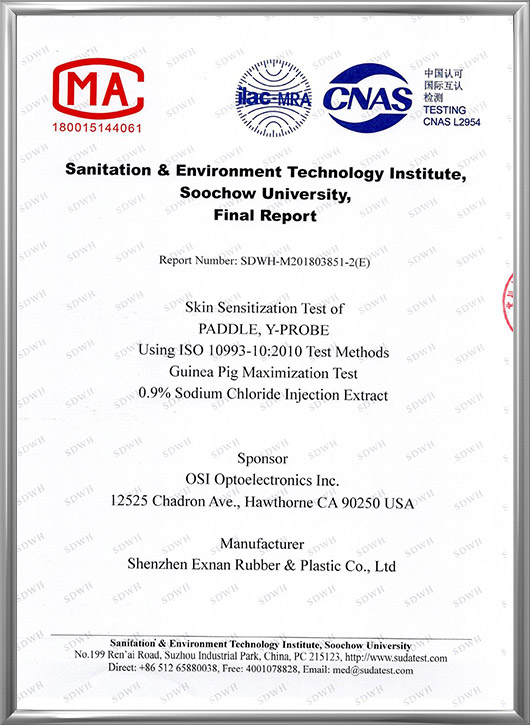
Skin sensitization test in guinea pigs using the maximization method with 0.9% sodium chloride injec
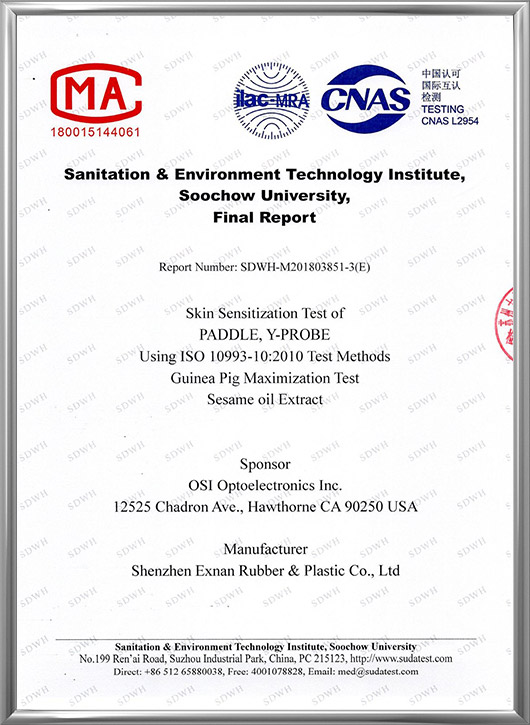
Skin sensitization test in guinea pigs:maximization method with sesame oil extraction
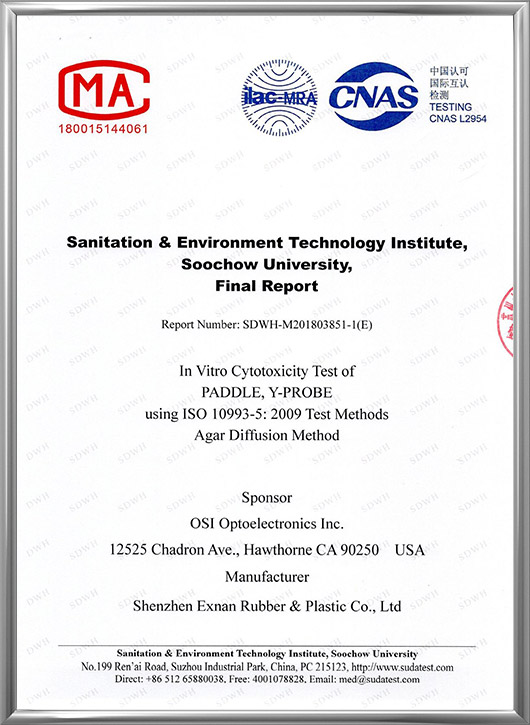
Cell toxicity test:agar diffusion method
Cooperating customers
Till now, Exnan products has been exports 35 countries, and more than 500 Medical equipment factory, health care companies, hospitals, clinics use our products, and win good reputation.












New
Our silicone accessories meet international medical standards through strict quality control.
Ensure patient safety with our premium products. Explore our catalog today!
News
Our silicone accessories meet international medical standards through strict quality control.
Ensure patient safety with our premium products. Explore our catalog today!
-

What is the difference between RoHS compliant and REACH?
RoHS targets 10 specific hazardous substances (like lead and mercury) within electrical and electronic equipment. REACH, in contrast, is a comprehensive regulation governing the manufacture, import, sale, and use of all chemical substances across industries within the EU.
MORE -

EU & US Compliance: Navigating RoHS vs. REACH for Medical-Grade Silicone Supply Chains
Hey, let's cut to the chase: $2M in medical device recalls happened last year because of non-compliant silicone components (according to EMA’s 2023 data). If you’re sourcing silicones for catheters, implants, or diagnostic equipment, confusing RoHS with REACH isn’t just annoying—it’s a $50,000-per-day violation waiting to happen.
MORE -

Is thermoplastic elastomer better than silicone?
Both silicone and TPE exhibit strong resistance to aging and weathering. However, TPE generally offers superior abrasion resistance, tear strength, and resistance to solvents. Silicone excels in electrical insulation and water repellency.
MORE -
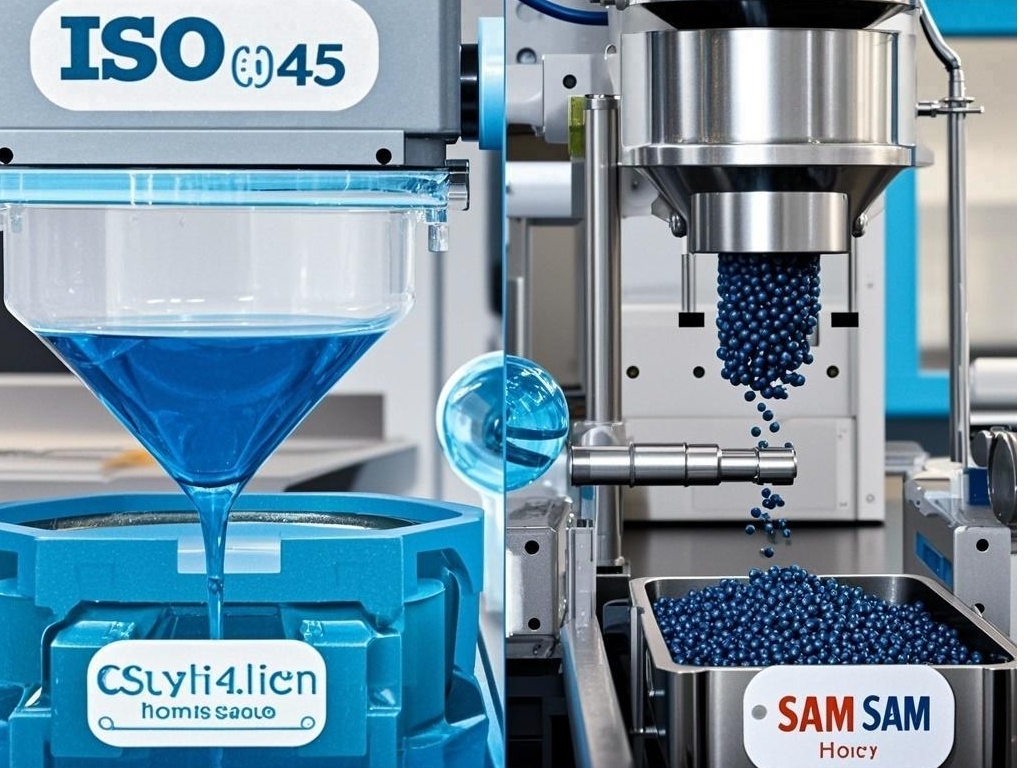
Silicone Manufacturing Secrets: How to Choose Between LSR and SAM for Medical Devices
You're an engineer at a European medtech firm. The clock's ticking. Prototypes look great in SAM silicone, but will they scale affordably? Or meet EU MDR rules? Choosing between LSR injection molding and Silicone Additive Manufacturing (SAM) feels like walking a regulatory tightrope.
MORE -

How to Choose the Right Medical Silicone Supplier: Top 10 Must-Haves for OEMs
Let's face it—if you’re designing medical devices, silicone isn't just a material; it's a lifeline. From catheters to wearables, medical-grade silicone ensures safety, durability, and compliance. But here’s the kicker: not all suppliers are created equal.
MORE -

IoT-Enabled Smart Silicone Sensors: Revolutionizing Disposable Medical Devices for Precision, Safety, and Cost-Efficiency
Imagine a world where medical devices not only treat patients but also predict complications, slash costs, and eliminate cross-contamination risks. Sounds like sci-fi? Not anymore. IoT-enabled smart silicone sensors are here, transforming disposable medical devices into precision tools for modern healthcare.
MORE -

Revolutionizing Disposable Medical Devices: How Smart Silicone Sensors and IoT Are Changing Healthcare
Imagine a world where a disposable medical device doesn't just treat a patient—it learns from them. That's the reality today, thanks to smart silicone sensors integrated with IoT (Internet of Things).
MORE -

What is the best alternative to silicone?
Polyurethanes are commonly used for horizontal joints or vertical applications requiring non-sagging performance, available in both single- and multi-component formulations. To determine if a polyurethane sealant can directly replace silicone in a specific scenario, seek guidance from a technical specialist to ensure optimal selection.
MORE
Recent News
—
Welcome to contact us
If you have any questions, please fill in the relevant information. Weare very willing to provide more information and a full range ofservices for both you and your company
Welcome to contact us
If you have any questions, please fill in the relevant information. Weare very willing to provide more information and a full range ofservices for both you and your company
EXNAN

点击右上角
分享给朋友吧
Copyright © 2004-2024 Guangdong Exnan Technology Co.,Ltd
点击右上角
分享给朋友吧
Copyright © 2004-2024 Guangdong Exnan Technology Co.,Ltd

 +86-0752-3869959 / 3869960
 +86 180 0752 8206
 Building 8, China-Korea Emerging Intelligent Manufacturing Industrial Park, No.27, Songbailing Road, China-Korea (Huizhou) Industrial Park, Zhongkai Area, Huizhou City, Guangdong Province, China

WeChat scan
