

Contact Us
lf you have any queries, get in touch today! Don't hesitate, We try to take the extra step forour customer satisfaction.

Hey there, I’m Steve!
I’m the sales manager of exnan medical silicone. I have been in this field for more than ten years. If you are looking for custom-made silicone rubber products, feel free to ask me any questions.
"
Our certificate
Possess 800 square meters of Class 10,000 dust-free workshop, Passed ISO9001:2015 quality management system certification and ISO13485:2016 medical device quality management system, and its products have obtained multiple biocompatibility tests, US FDA and EU LFGB certifications.
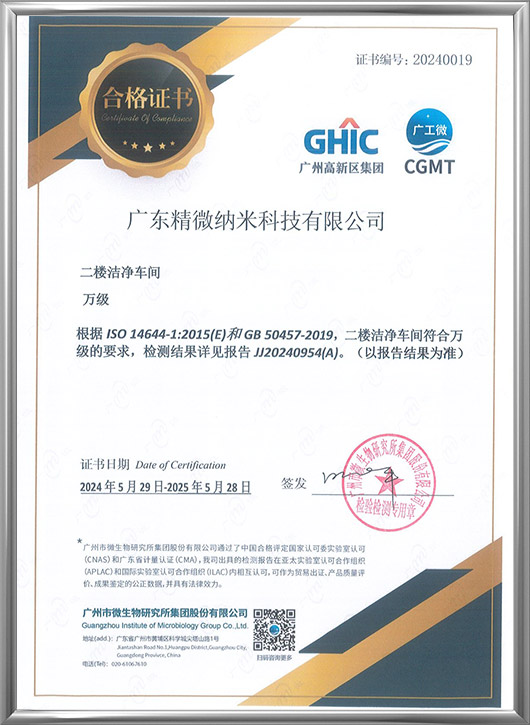
Class 10,000 cleanroom certification
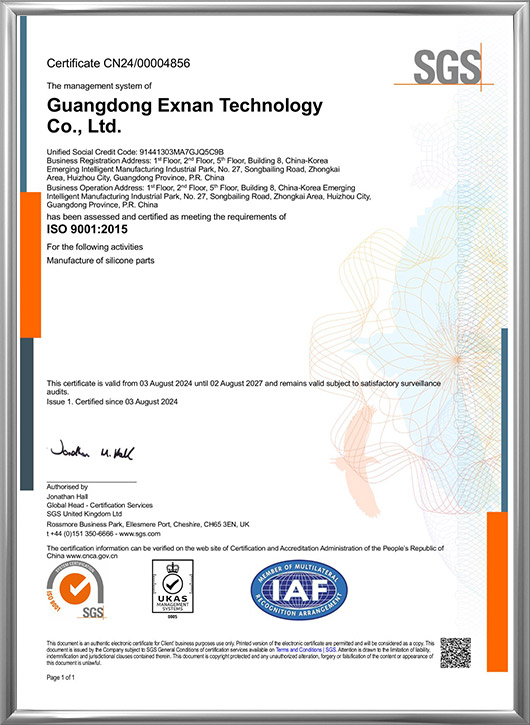
ISO 9001:2015
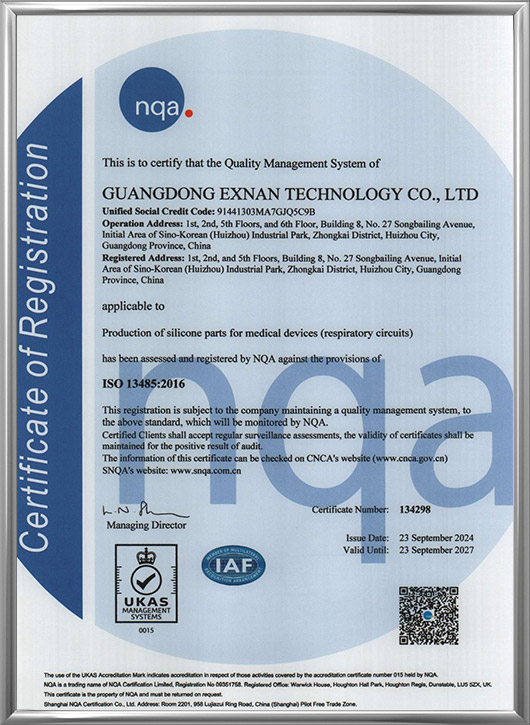
ISO 13485:2016
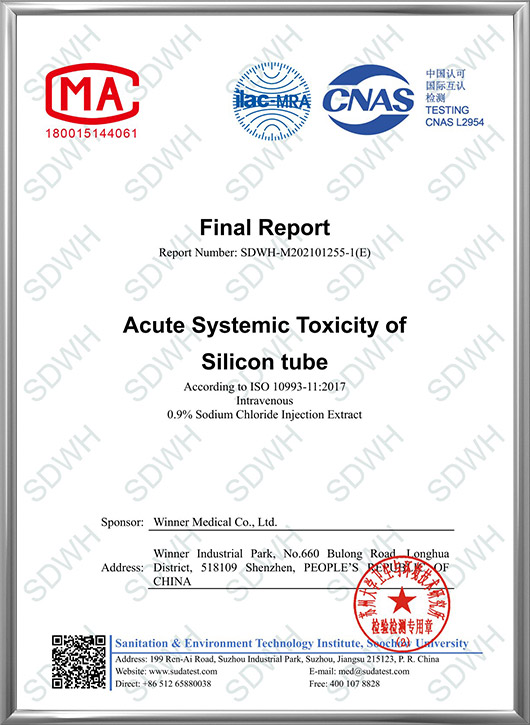
ISO 10993-11:2017 Tail vein injection
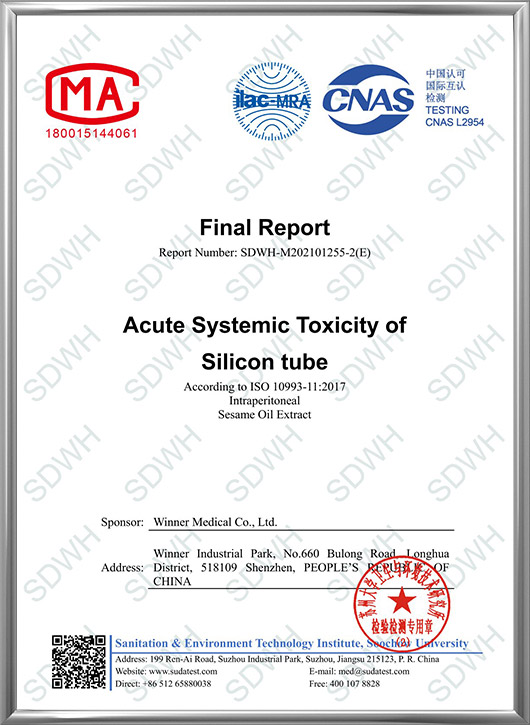
ISO 10993-11:2017 Intraperitoneal injection
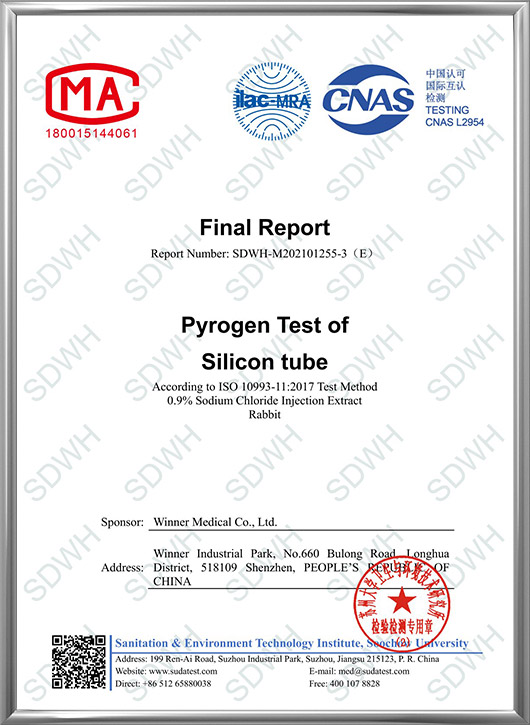
ISO 10993-11:2017 Pyrogens
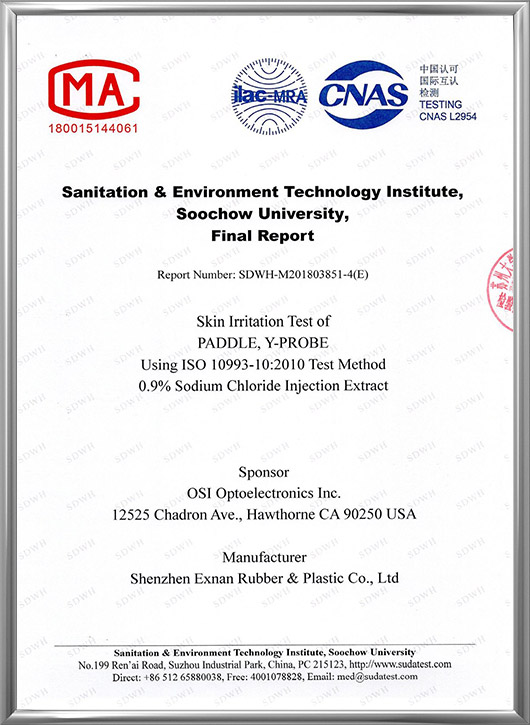
Skin irritation test for extract of 0.9% sodium chloride injection
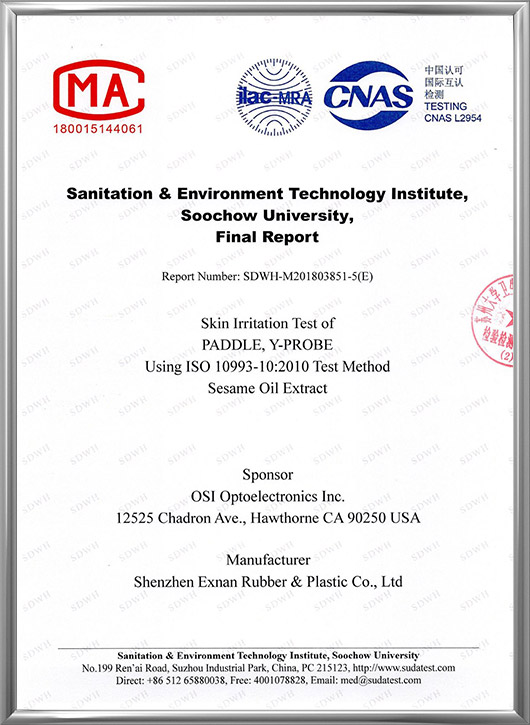
Skin irritation test for sesame oil extraction
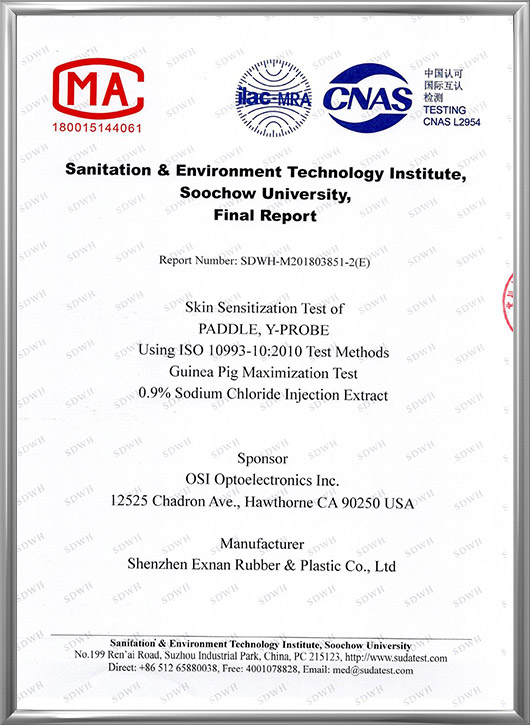
Skin sensitization test in guinea pigs using the maximization method with 0.9% sodium chloride injec
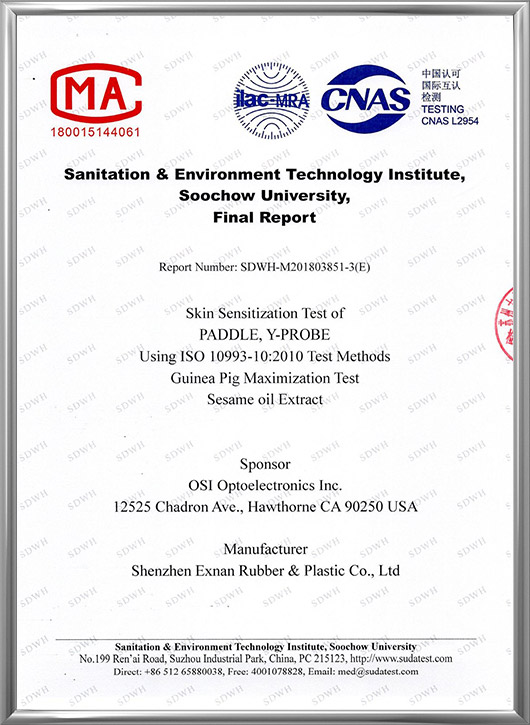
Skin sensitization test in guinea pigs:maximization method with sesame oil extraction
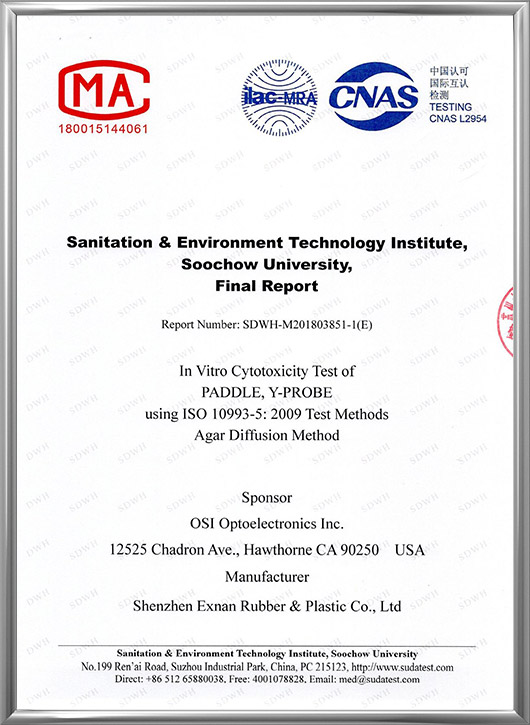
Cell toxicity test:agar diffusion method
Cooperating customers
Till now, Exnan products has been exports 35 countries, and more than 500 Medical equipment factory, health care companies, hospitals, clinics use our products, and win good reputation.











New
Our silicone accessories meet international medical standards through strict quality control.
Ensure patient safety with our premium products. Explore our catalog today!
News
Our silicone accessories meet international medical standards through strict quality control.
Ensure patient safety with our premium products. Explore our catalog today!
Without Post-Curing, Would You Use This Silicone Part in a Medical Device?
Time: 2026-04-30 10:04:31
Author: Amber
Click:
Post-curing is an essential step in medical silicone manufacturing that cannot be skipped. Without it, residual unreacted substances and low-molecular-weight cyclics can cause leachable contamination, cytotoxicity failure, performance drift, and odor. Buyers should verify post-curing by reviewing batch records, smell testing, requesting data, and on-site audits. Post-curing is a fundamental requirement for medical-grade quality.
In medical silicone OEM manufacturing, one critical step is often overlooked — or deliberately skipped: post-curing (post-vulcanization).
Two identical-looking parts—one post-cured, one not—can differ dramatically in safety, biocompatibility, and long-term stability.
What is post-curing?
After primary vulcanization, silicone still contains residues: unreacted cross-linking agents, catalyst residues, low-molecular-weight cyclics (D3–D10), and other volatiles.
Post-curing places molded parts in a 150–200°C oven for 2–6 hours, driving out these residuals and stabilizing the material. This step separates medical-grade from industrial-grade silicone.
Risks of skipping post-curing
1. Leachable contamination
Residuals can leach into drug solutions, blood, or saline — causing fluid turbidity, clogged lines, or even drug degradation.
2. Biocompatibility failure
Untreated silicone often fails ISO 10993 cytotoxicity tests. A failed test means delayed approvals and costly retesting.
3. Performance drift
Parts may harden, lose resilience, or develop sticky surfaces over time — a serious risk for seals and valve diaphragms.
4. Odor issues
A distinct acidic or pungent smell affects user experience and attracts regulatory complaints.
How to verify post-curing?
- Request batch records – oven ID, temperature profile, time log, operator signature. No record = no post-curing.
- Smell test – properly post-cured parts are nearly odorless. Strong acidic/solvent smell indicates skipped curing.
- Ask for test data – volatile content, leachables, cytotoxicity before/after.
- Audit the ovens – dedicated post-curing ovens with temperature recorders should exist and be in use.
Post-curing adds time and cost — which is precisely why compliant suppliers do it, while others skip it. Skipping post-curing is gambling with patient safety and your regulatory approval.
Visit our website to learn more about medical silicone OEM manufacturing and quality control:

点击右上角
分享给朋友吧







 Long by picture save/share
0
你的喜欢,就是我坚持写下去的能量器
YouArticle
已有0人推荐
文章推荐
Medical Silicone vs. TPE/TPU: Why Is Silicone Still the Preferred Material for Medical Consumables?
Medical Silicone Mold Design: The First Gateway to Product Precision
New Requirements of ISO13485:2016 for Medical Silicone Suppliers
Medical Silicone Consumables Market Sees New Growth: Respiratory Equipment Drives Demand for Precision Components
From Concept to Compliant Mass Production – EXNAN’s One‑Stop Custom Implantable Silicone Components Service
Related news recommendations —
Related Products —



News Products —


INQUIRY


Add Successfully

Hey there, I’m Steve!
15+ years in medical silicone accessories, linking manufacturers and healthcare providers for compliant, high-quality products. Trusted advisor focused on innovation and patient care. If you are looking for custom-made silicone rubber products, feel free to ask me any questions.
Hey there, I’m Steve!
15+ years in medical silicone accessories, linking manufacturers and healthcare providers for compliant, high-quality products. Trusted advisor focused on innovation and patient care. If you are looking for custom-made silicone rubber products, feel free to ask me any questions.
Welcome to contact us
If you have any questions, please fill in the relevant information. Weare very willing to provide more information and a full range ofservices for both you and your company
Welcome to contact us
If you have any questions, please fill in the relevant information. Weare very willing to provide more information and a full range ofservices for both you and your company
EXNAN
点击右上角
分享给朋友吧
Copyright © 2004-2024 Guangdong Exnan Technology Co.,Ltd
点击右上角
分享给朋友吧
Copyright © 2004-2024 Guangdong Exnan Technology Co.,Ltd

 +86-0752-3869959 / 3869960
 +86 180 0752 8206
 Building 8, China-Korea Emerging Intelligent Manufacturing Industrial Park, No.27, Songbailing Road, China-Korea (Huizhou) Industrial Park, Zhongkai Area, Huizhou City, Guangdong Province, China

WeChat scan
