

Contact Us
lf you have any queries, get in touch today! Don't hesitate, We try to take the extra step forour customer satisfaction.

Hey there, I’m Steve!
I’m the sales manager of exnan medical silicone. I have been in this field for more than ten years. If you are looking for custom-made silicone rubber products, feel free to ask me any questions.
"
Our certificate
Possess 800 square meters of Class 10,000 dust-free workshop, Passed ISO9001:2015 quality management system certification and ISO13485:2016 medical device quality management system, and its products have obtained multiple biocompatibility tests, US FDA and EU LFGB certifications.
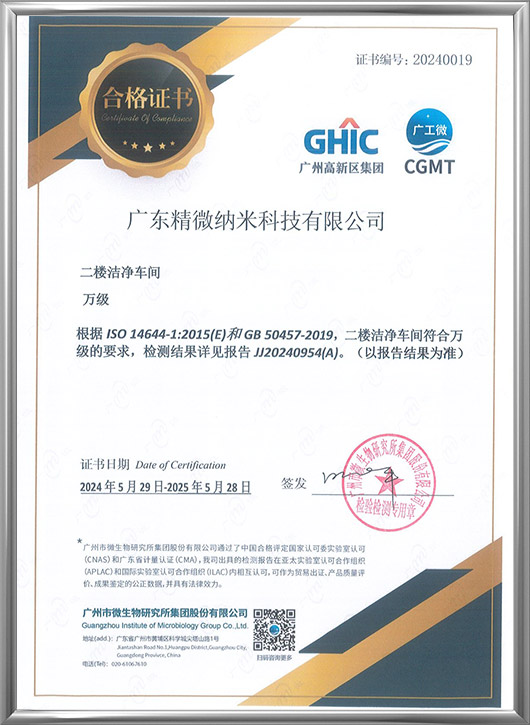
Class 10,000 cleanroom certification
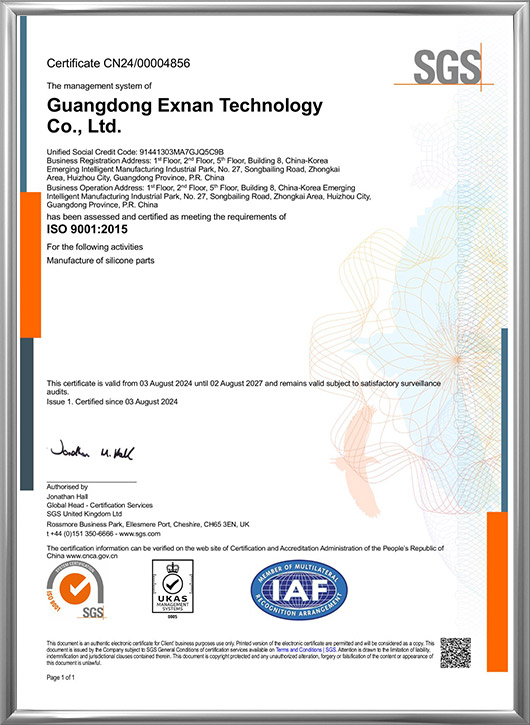
ISO 9001:2015
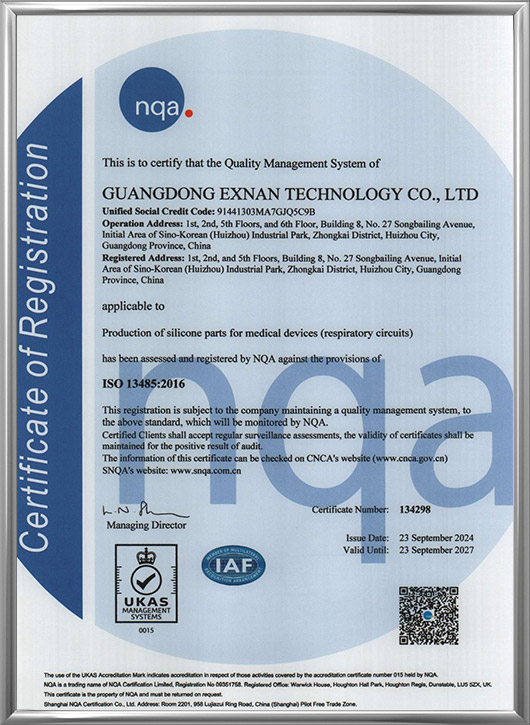
ISO 13485:2016
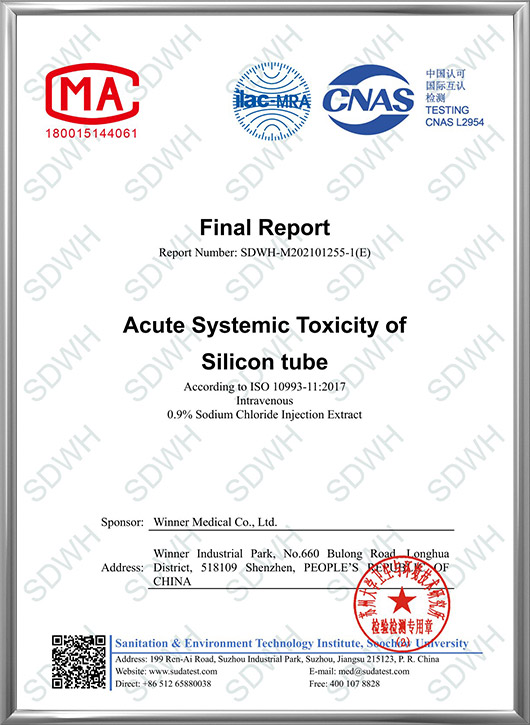
ISO 10993-11:2017 Tail vein injection
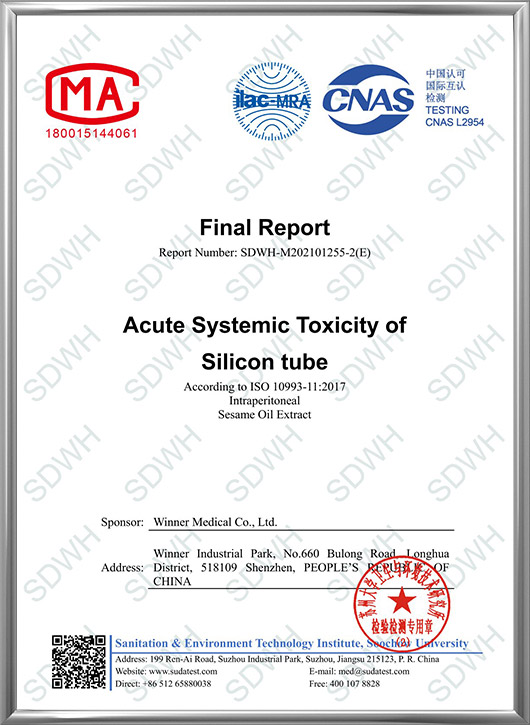
ISO 10993-11:2017 Intraperitoneal injection
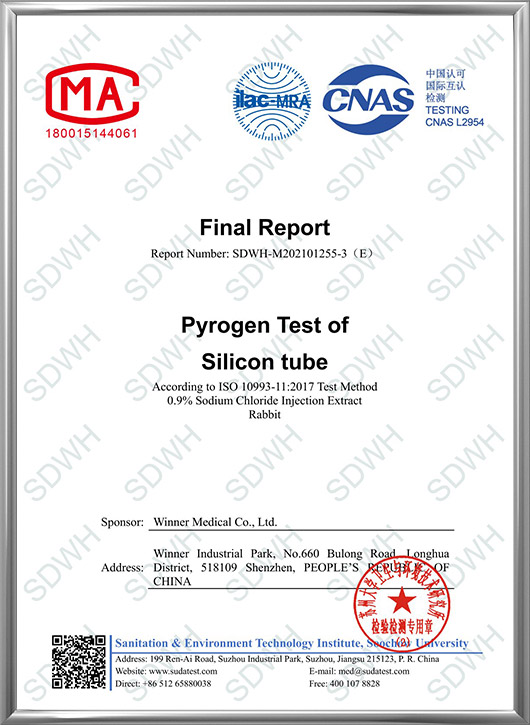
ISO 10993-11:2017 Pyrogens
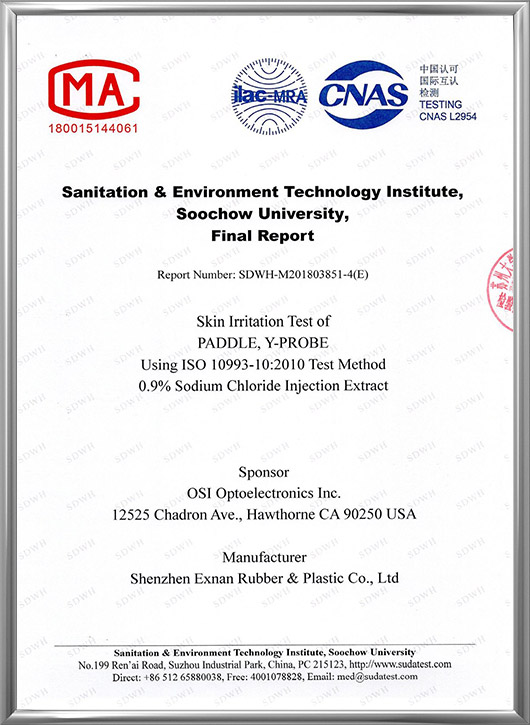
Skin irritation test for extract of 0.9% sodium chloride injection
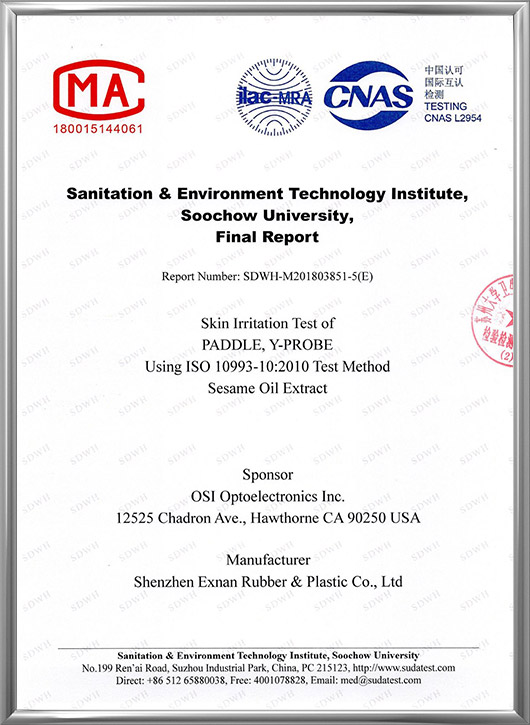
Skin irritation test for sesame oil extraction
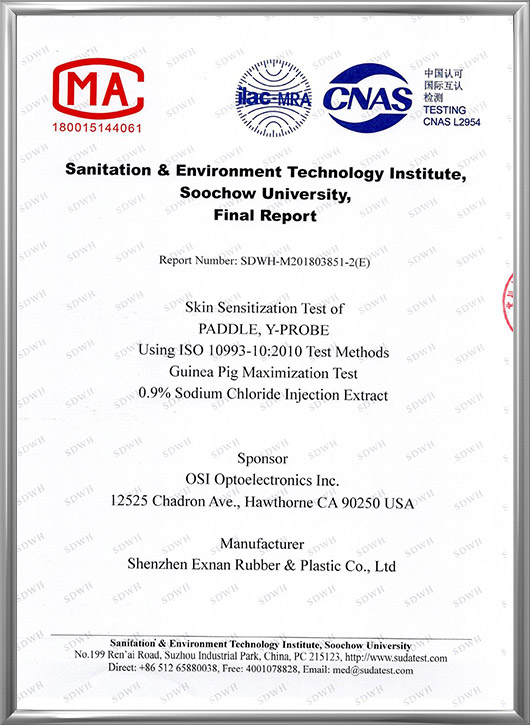
Skin sensitization test in guinea pigs using the maximization method with 0.9% sodium chloride injec
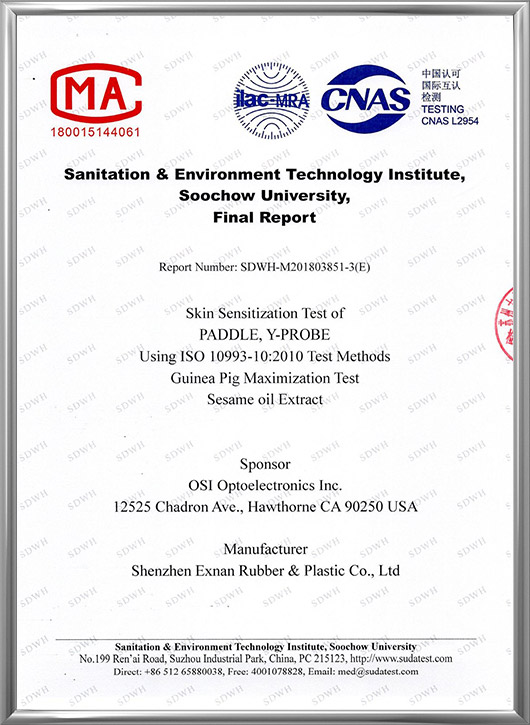
Skin sensitization test in guinea pigs:maximization method with sesame oil extraction
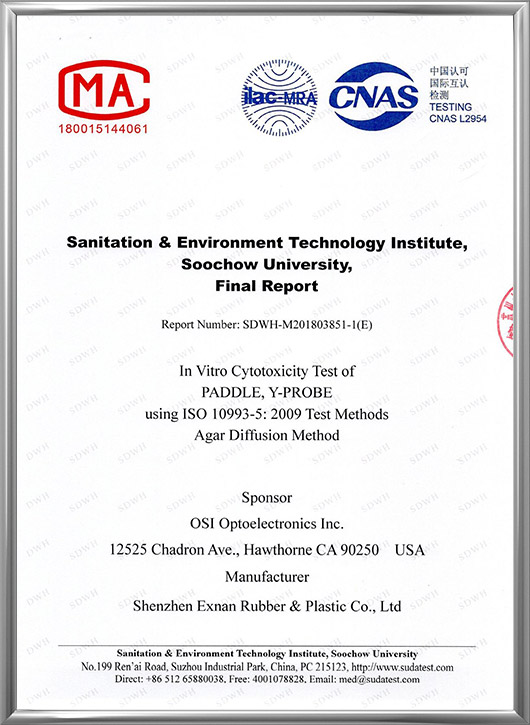
Cell toxicity test:agar diffusion method
Cooperating customers
Till now, Exnan products has been exports 35 countries, and more than 500 Medical equipment factory, health care companies, hospitals, clinics use our products, and win good reputation.


















New
Our silicone accessories meet international medical standards through strict quality control.
Ensure patient safety with our premium products. Explore our catalog today!
News
Our silicone accessories meet international medical standards through strict quality control.
Ensure patient safety with our premium products. Explore our catalog today!
Medical Silicone vs. TPE/TPU: Why Is Silicone Still the Preferred Material for Medical Consumables?
Time: 2026-05-21 00:00:00
Author: Amber
Click:
Medical silicone, TPE, and TPU are common elastomers for medical consumables. Silicone offers the widest temperature range (-50°C~250°C), withstands repeated steam sterilization, excels in aging resistance, features extremely low extractables, and provides the best biocompatibility for high-end consumables with prolonged body contact. TPE is low-cost but lacks heat and chemical resistance; TPU has high strength but hydrolyzes in humid heat. In comprehensive comparison, silicone remains the prefe
In the medical consumables field, silicone, TPE (thermoplastic elastomer), and TPU (thermoplastic polyurethane) are three common elastomeric materials. Many product designers often wonder: why is silicone more expensive yet still the preferred choice for most medical consumables? A systematic performance comparison reveals the answer.
Temperature resistance varies significantly. Medical silicone (LSR/SR) operates from -50°C to 250°C and withstands repeated steam sterilization (134°C) without performance degradation. TPE only reaches 120°C and deforms at high temperatures; TPU peaks at 100°C and hydrolyzes in humid heat, with tensile strength and elongation at break dropping notably after multiple sterilization cycles, failing to meet reusable device requirements.
Biocompatibility is the most critical metric for medical materials. Silicone features extremely low extractables and leachables, excelling in ISO10993 tests to meet the highest requirements for prolonged human tissue contact and even implantable applications. TPE and TPU can pass basic cytotoxicity tests, but TPE often contains plasticizers with leaching risks; TPU degradation products (e.g., MDI derivatives) may trigger inflammatory responses, limiting their use in long-term implant scenarios.
Aging and chemical resistance: Silicone naturally resists ozone, UV, and common hospital disinfectants (e.g., alcohols, hydrogen peroxide), offering a significantly longer service life than TPE and TPU. TPE swells in oils or alcohols, causing dimensional changes and seal failure; TPU is sensitive to strong acids and alkalis, with surface cracking under repeated cleaner contact.
Soft touch and resilience: Silicone provides the best softness and rebound performance among all elastomers, ideal for facial-contact respiratory mask seals and earplugs. TPE feels similar but exhibits noticeable rebound lag and higher compression set; TPU feels relatively hard and unsuitable for comfort-oriented consumables.
Cost: TPE indeed offers price advantages, but for medical consumables requiring repeated sterilization, long-term implantation, or high reliability, silicone's performance superiority far outweighs its cost difference. In summary, for core medical products such as respiratory masks, drainage tubes, and surgical seals, medical silicone remains irreplaceable.
Guangdong Exnan Technology Co., Ltd. focuses on medical-grade SR and LSR manufacturing, ensuring product safety and reliability from the material source for global medical customers.For more information, please visit our website: www.exnan.com

点击右上角
分享给朋友吧







 Long by picture save/share
0
文章推荐
Medical Silicone Mold Design: The First Gateway to Product Precision
New Requirements of ISO13485:2016 for Medical Silicone Suppliers
Medical Silicone Consumables Market Sees New Growth: Respiratory Equipment Drives Demand for Precision Components
From Concept to Compliant Mass Production – EXNAN’s One‑Stop Custom Implantable Silicone Components Service
Related news recommendations —
Related Products —

News Products —

INQUIRY


Add Successfully

Hey there, I’m Steve!
15+ years in medical silicone accessories, linking manufacturers and healthcare providers for compliant, high-quality products. Trusted advisor focused on innovation and patient care. If you are looking for custom-made silicone rubber products, feel free to ask me any questions.
Hey there, I’m Steve!
15+ years in medical silicone accessories, linking manufacturers and healthcare providers for compliant, high-quality products. Trusted advisor focused on innovation and patient care. If you are looking for custom-made silicone rubber products, feel free to ask me any questions.
Welcome to contact us
If you have any questions, please fill in the relevant information. Weare very willing to provide more information and a full range ofservices for both you and your company
Welcome to contact us
If you have any questions, please fill in the relevant information. Weare very willing to provide more information and a full range ofservices for both you and your company
EXNAN
点击右上角
分享给朋友吧
Copyright © 2004-2024 Guangdong Exnan Technology Co.,Ltd
点击右上角
分享给朋友吧
Copyright © 2004-2024 Guangdong Exnan Technology Co.,Ltd

 +86-0752-3869959 / 3869960
 +86 180 0752 8206
 Building 8, China-Korea Emerging Intelligent Manufacturing Industrial Park, No.27, Songbailing Road, China-Korea (Huizhou) Industrial Park, Zhongkai Area, Huizhou City, Guangdong Province, China

WeChat scan
