

Contact Us
lf you have any queries, get in touch today! Don't hesitate, We try to take the extra step forour customer satisfaction.

Hey there, I’m Steve!
I’m the sales manager of exnan medical silicone. I have been in this field for more than ten years. If you are looking for custom-made silicone rubber products, feel free to ask me any questions.
"
Our certificate
Possess 800 square meters of Class 10,000 dust-free workshop, Passed ISO9001:2015 quality management system certification and ISO13485:2016 medical device quality management system, and its products have obtained multiple biocompatibility tests, US FDA and EU LFGB certifications.
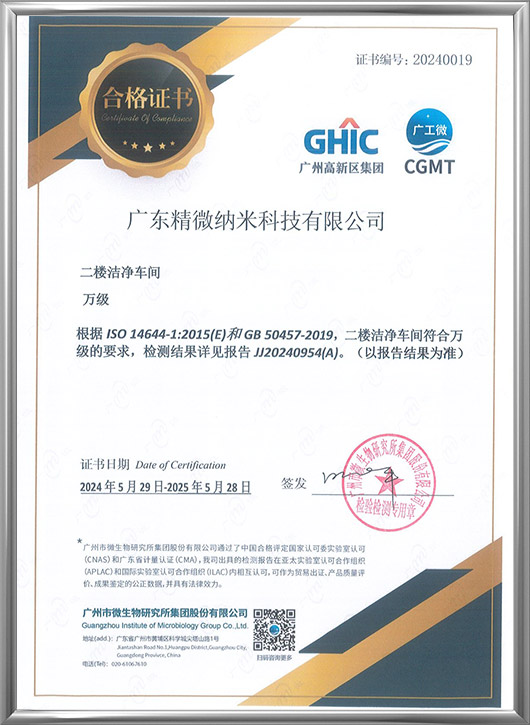
Class 10,000 cleanroom certification
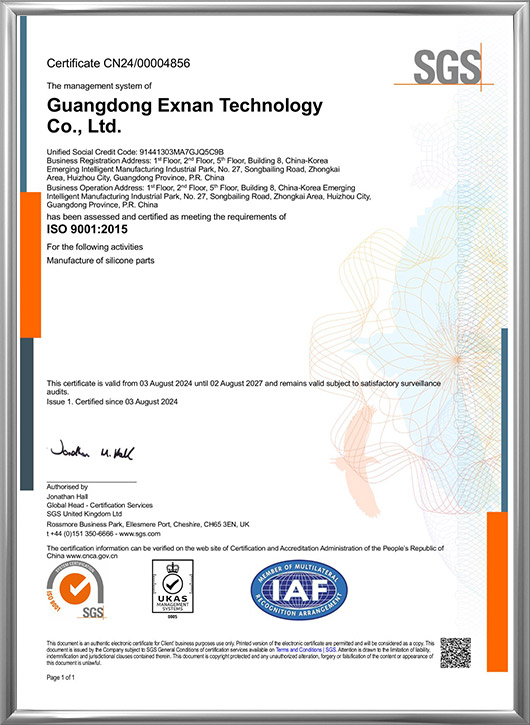
ISO 9001:2015
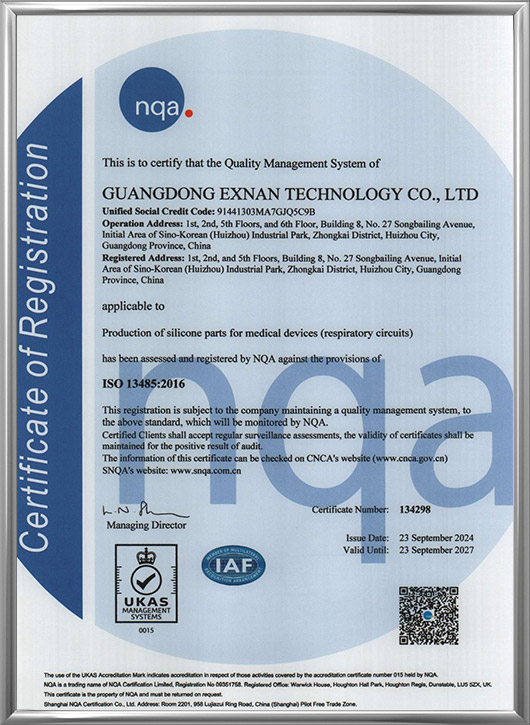
ISO 13485:2016
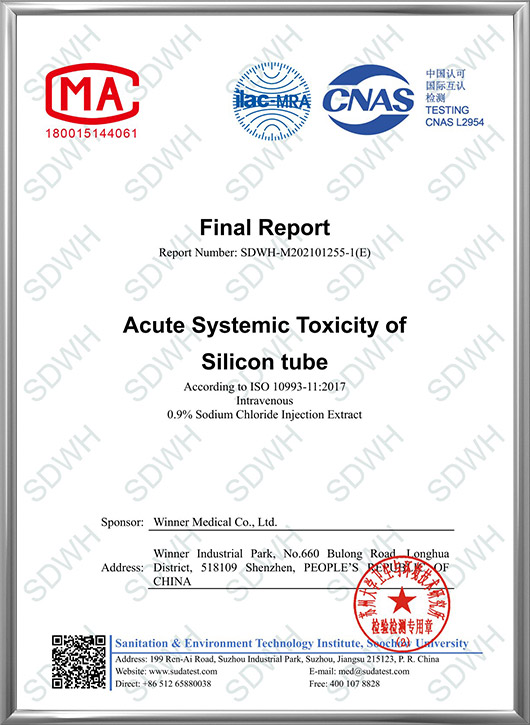
ISO 10993-11:2017 Tail vein injection
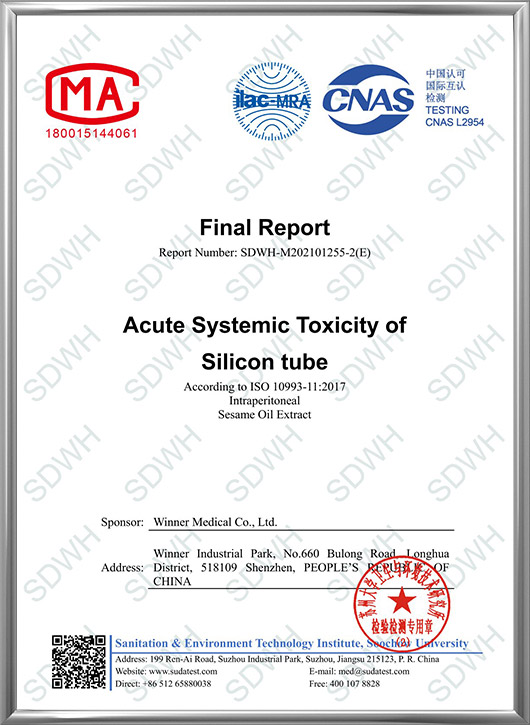
ISO 10993-11:2017 Intraperitoneal injection
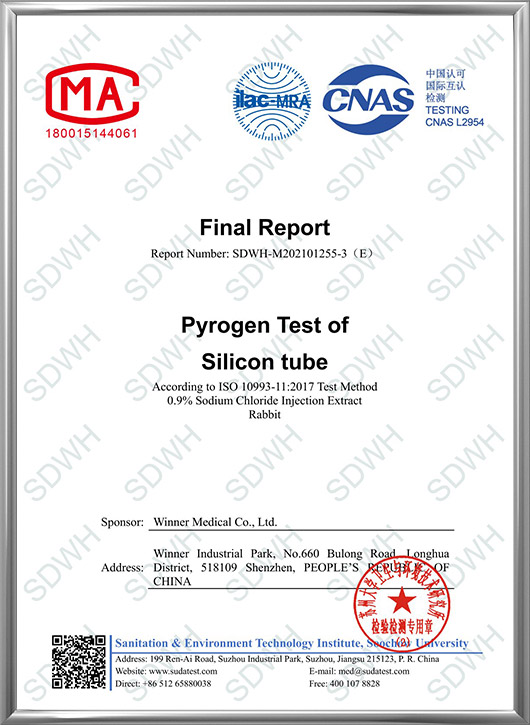
ISO 10993-11:2017 Pyrogens
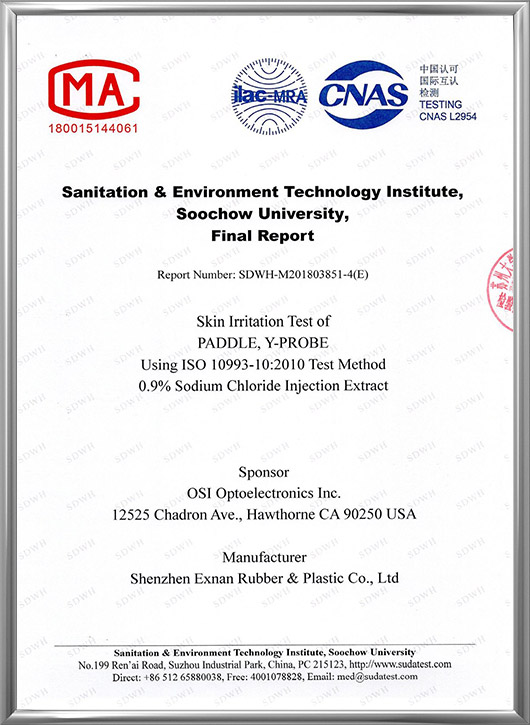
Skin irritation test for extract of 0.9% sodium chloride injection
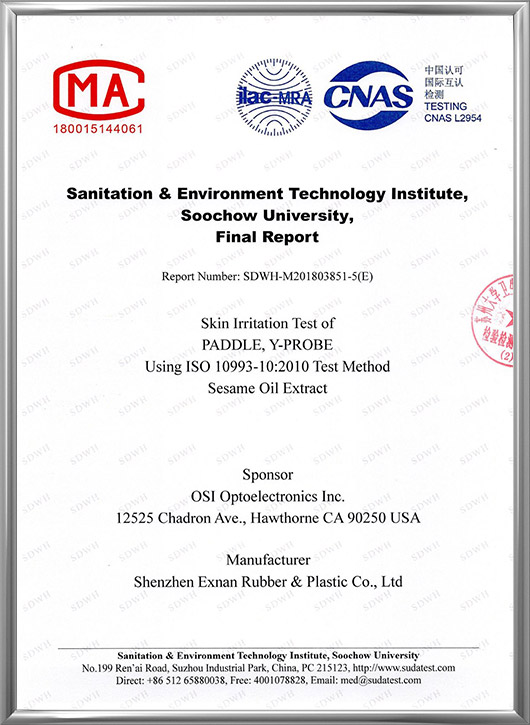
Skin irritation test for sesame oil extraction
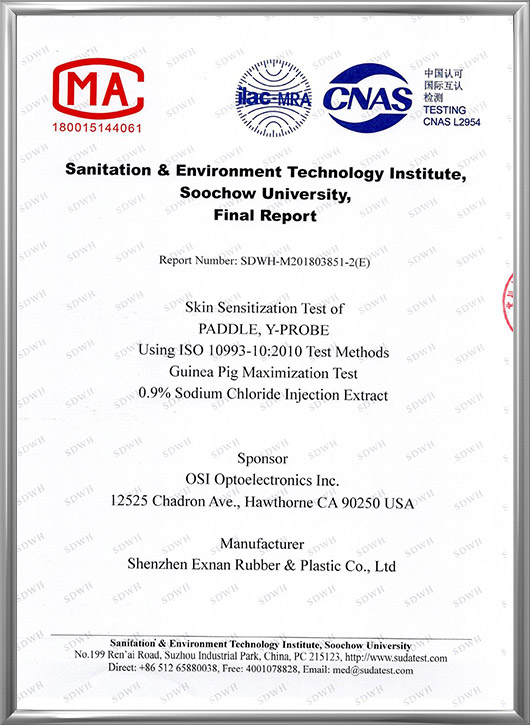
Skin sensitization test in guinea pigs using the maximization method with 0.9% sodium chloride injec
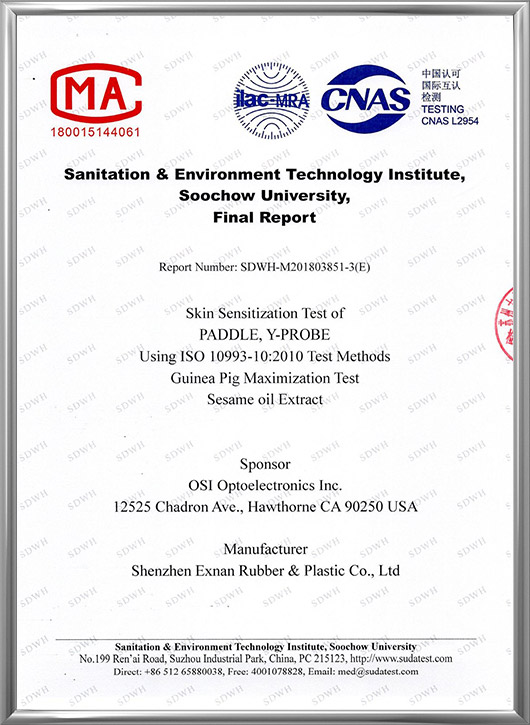
Skin sensitization test in guinea pigs:maximization method with sesame oil extraction
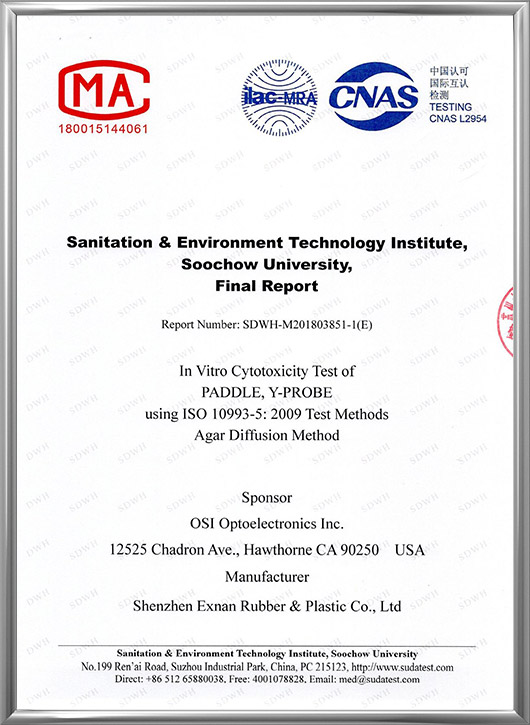
Cell toxicity test:agar diffusion method
Cooperating customers
Till now, Exnan products has been exports 35 countries, and more than 500 Medical equipment factory, health care companies, hospitals, clinics use our products, and win good reputation.




















New
Our silicone accessories meet international medical standards through strict quality control.
Ensure patient safety with our premium products. Explore our catalog today!
News
Our silicone accessories meet international medical standards through strict quality control.
Ensure patient safety with our premium products. Explore our catalog today!
Silicone Parts Fail After Sterilization: 5 Proven Fixes
Time: 2026-09-29 09:50:25
Author: Amber
Click:
Silicone is chosen for medical components because it survives sterilization—but "survives" doesn't mean "unchanged." In fact, silicone parts fail after sterilization more often than most engineers expect, not because the material is wrong, but because the design didn't account for what sterilization does over time. Autoclave, gamma, EtO, and electron beam each affect silicone differently: hardness shifts, compression set increases, elasticity drops, and surface properties change. When the design
Silicone is chosen for medical components because it survives sterilization. Autoclave, EtO, gamma, electron beam—silicone handles all of them better than most materials. But 'survives' doesn't mean 'unchanged.' In fact, silicone parts fail after sterilization more often than most engineers expect—not because the material is wrong, but because the design didn't account for what sterilization does to it over time.
Sterilization changes silicone. It can increase hardness, increase compression set, reduce elasticity, and alter surface properties. In most cases, the changes are small enough that the part still works. But when the design has no margin, even a small change is enough to cause a failure.
I've seen this play out repeatedly. A silicone component passes all validation testing. It launches. Then, after months of field use and repeated sterilization, it starts to leak, crack, or lose sealing force. The material didn't fail. The design didn't account for what sterilization would do to the material over time.
The frustrating part is that this failure mode is predictable. It's not a mystery. It's a gap in validation. And it can be closed before the device ever reaches a patient.
Why Silicone Parts Fail After Sterilization: What Sterilization Actually Does
| Sterilization Method | Primary Effect on Silicone | Typical Change | Watch For |
|---|---|---|---|
| Autoclave (134°C steam) | Thermal aging, continued cross-linking | Hardness +2–6 Shore A after repeated cycles | Compression set increase, elasticity loss |
| Gamma irradiation (25–50 kGy) | Chain scission and cross-linking | Hardness ±3–8 Shore A depending on formulation | Yellowing, embrittlement, compression set |
| Ethylene oxide (EtO) | Minimal material change | Surface residue possible | Residual EtO, surface tackiness |
| Electron beam | Similar to gamma | Hardness change, cross-linking | Dose-dependent effects |
The key insight: the change depends on the formulation, the dose, and the number of cycles. A part that survives one autoclave cycle may fail after fifty. A part that passes gamma at 25 kGy may fail at 50 kGy. A part that performs perfectly in a single-use device may behave completely differently in a reusable device that is sterilized weekly for three years.
Why This Gets Missed
Validation testing is often done on as-molded parts, or on parts sterilized once. That data doesn't predict what happens after the device is used and re-sterilized dozens of times over its life.
There are three common reasons this happens:
The validation protocol was written for a single-use device. The device was later repositioned as reusable, but the sterilization testing wasn't updated.
The sterilization method was changed late in development. The device was validated with EtO, then switched to gamma for cost or logistics reasons. The silicone was never re-tested.
The supplier's data was used instead of the customer's data. The silicone supplier tested a generic sample. The customer's actual part, with its actual geometry and wall thickness, was never tested.
This is why silicone parts fail after sterilization in the field even though they passed initial validation. The validation protocol was written for a single-use device, but the device was later repositioned as reusable—and the sterilization testing was never updated.
For reusable devices, the correct validation is: test after the maximum number of sterilization cycles the device is designed for. For single-use devices, test after the actual sterilization dose. For either, test the properties that matter for the application—compression set, hardness, sealing force, tear strength.
What to Specify and Test
| Property | Test Condition | Why It Matters |
|---|---|---|
| Hardness | After sterilization, after max cycles | Sealing force, assembly fit |
| Compression set | After sterilization, after max cycles | Seal life, rebound |
| Tensile strength | After sterilization | Resistance to tearing and handling |
| Surface properties | After sterilization | Adhesion, friction, tackiness |
| Volatile content | After post-curing | Outgassing, leaching |
We test sterilization effects on every formulation we recommend for reusable devices. If a formulation can't hold its properties after the required number of cycles, we reformulate before the customer ever sees a problem.
This is not a cost center. It's risk reduction. One field failure caused by sterilization-induced property change can cost more than a decade of testing. According to ISO 10993-1:2025, biological evaluation must consider exposure duration—and sterilization-induced changes are part of that evaluation. ASTM D395 provides the standard test method for compression set.
The Bottom Line
Silicone survives sterilization. But it doesn't survive unchanged. The question isn't whether silicone parts fail after sterilization—it's whether your design has margin for the change. Test after sterilization, test after repeated cycles, and design with margin. If your supplier doesn't have this data, ask why.
Guangdong Exnan Technology Co., Ltd. focuses on medical-grade SR and LSR manufacturing, ensuring product safety and reliability from the material source for global medical customers.For more information, please visit our website: www.exnan.com

点击右上角
分享给朋友吧







 Long by picture save/share
0
文章推荐
Medical Silicone vs. TPE/TPU: Why Is Silicone Still the Preferred Material for Medical Consumables?
Medical Silicone Mold Design: The First Gateway to Product Precision
New Requirements of ISO13485:2016 for Medical Silicone Suppliers
Medical Silicone Consumables Market Sees New Growth: Respiratory Equipment Drives Demand for Precision Components
Related news recommendations —
Related Products —




News Products —

INQUIRY


Add Successfully

Hey there, I’m Steve!
15+ years in medical silicone accessories, linking manufacturers and healthcare providers for compliant, high-quality products. Trusted advisor focused on innovation and patient care. If you are looking for custom-made silicone rubber products, feel free to ask me any questions.
Hey there, I’m Steve!
15+ years in medical silicone accessories, linking manufacturers and healthcare providers for compliant, high-quality products. Trusted advisor focused on innovation and patient care. If you are looking for custom-made silicone rubber products, feel free to ask me any questions.
Welcome to contact us
If you have any questions, please fill in the relevant information. Weare very willing to provide more information and a full range ofservices for both you and your company
Welcome to contact us
If you have any questions, please fill in the relevant information. Weare very willing to provide more information and a full range ofservices for both you and your company
EXNAN
点击右上角
分享给朋友吧
Copyright © 2004-2024 Guangdong Exnan Technology Co.,Ltd
点击右上角
分享给朋友吧
Copyright © 2004-2024 Guangdong Exnan Technology Co.,Ltd

 +86-0752-3869959 / 3869960
 +86 180 0752 8206
 Building 8, China-Korea Emerging Intelligent Manufacturing Industrial Park, No.27, Songbailing Road, China-Korea (Huizhou) Industrial Park, Zhongkai Area, Huizhou City, Guangdong Province, China

WeChat scan
