

Contact Us
lf you have any queries, get in touch today! Don't hesitate, We try to take the extra step forour customer satisfaction.
"
Our certificate
Possess 800 square meters of Class 10,000 dust-free workshop, Passed ISO9001:2015 quality management system certification and ISO13485:2016 medical device quality management system, and its products have obtained multiple biocompatibility tests, US FDA and EU LFGB certifications.
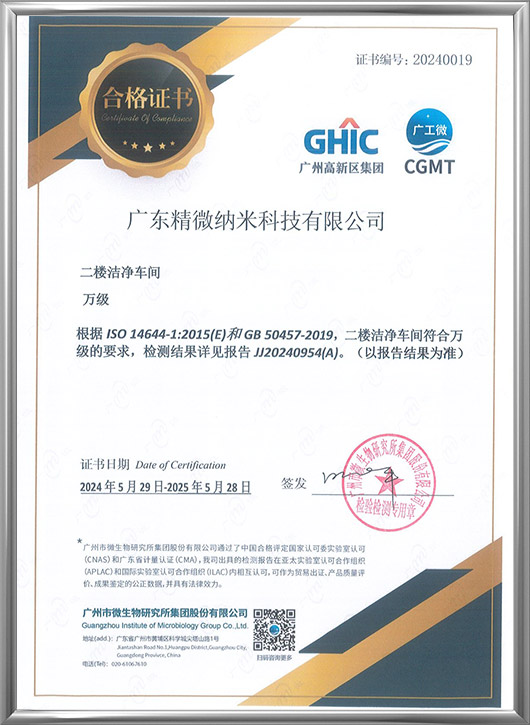
Class 10,000 cleanroom certification
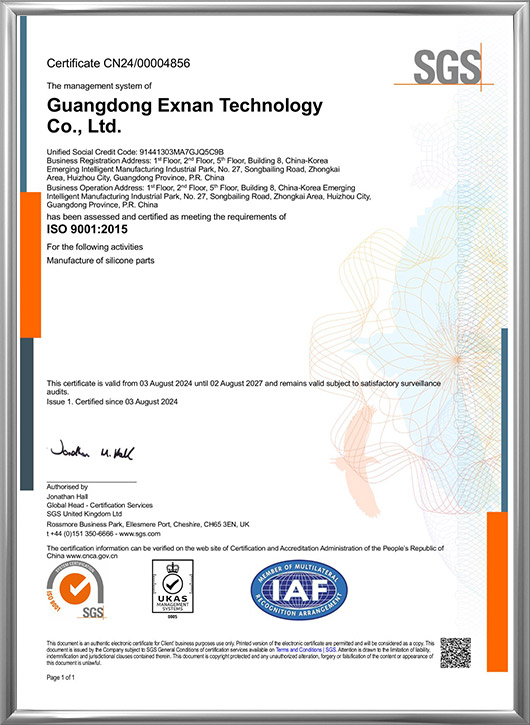
ISO 9001:2015
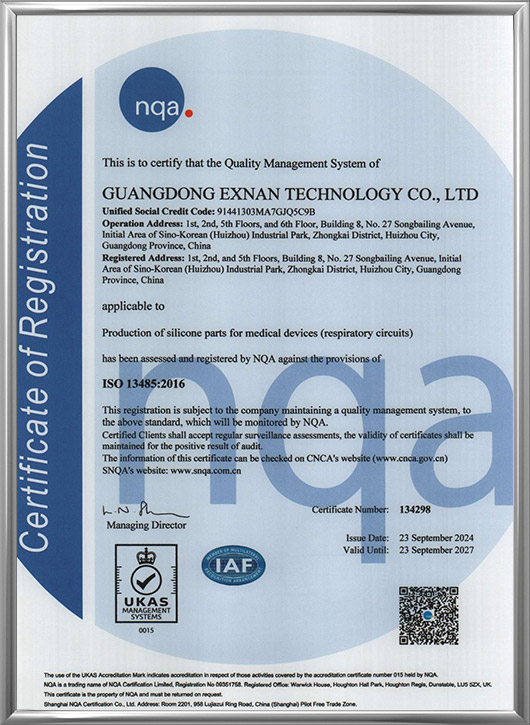
ISO 13485:2016
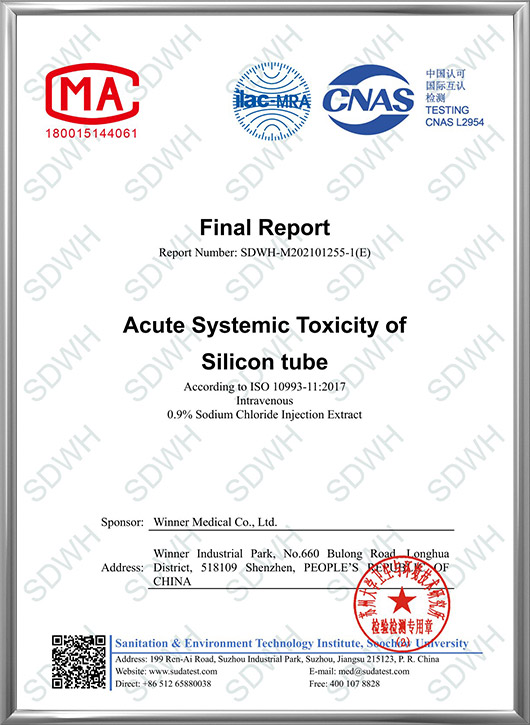
ISO 10993-11:2017 Tail vein injection
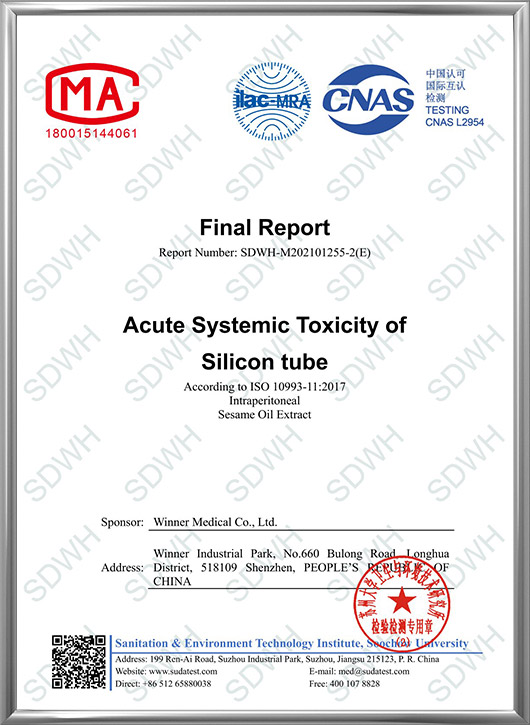
ISO 10993-11:2017 Intraperitoneal injection
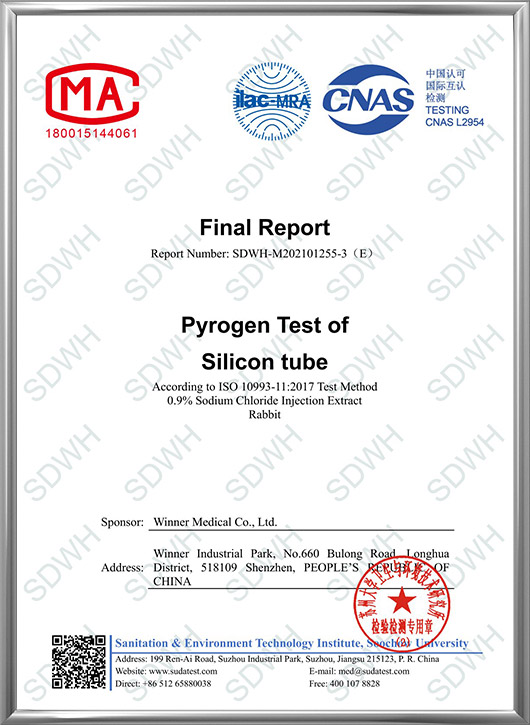
ISO 10993-11:2017 Pyrogens
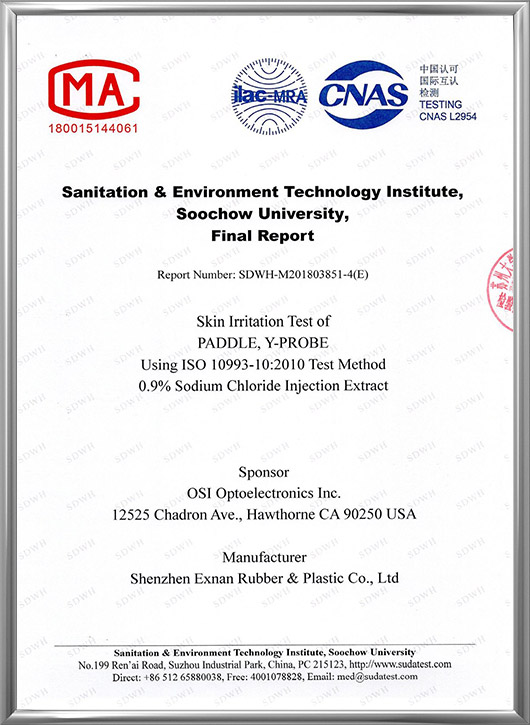
Skin irritation test for extract of 0.9% sodium chloride injection
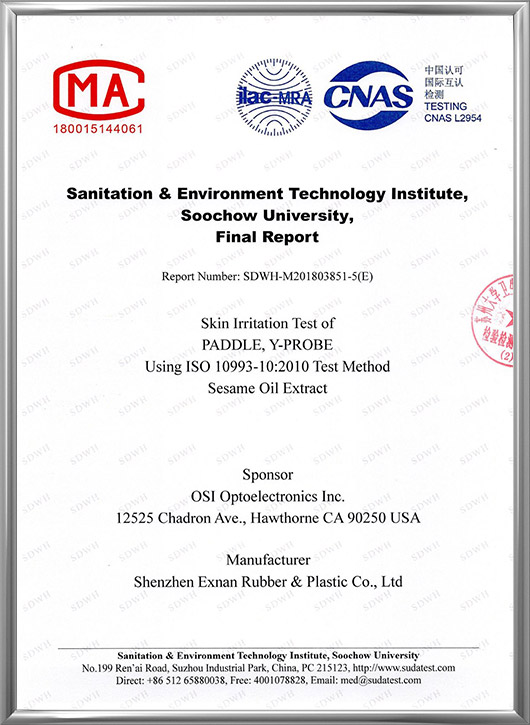
Skin irritation test for sesame oil extraction
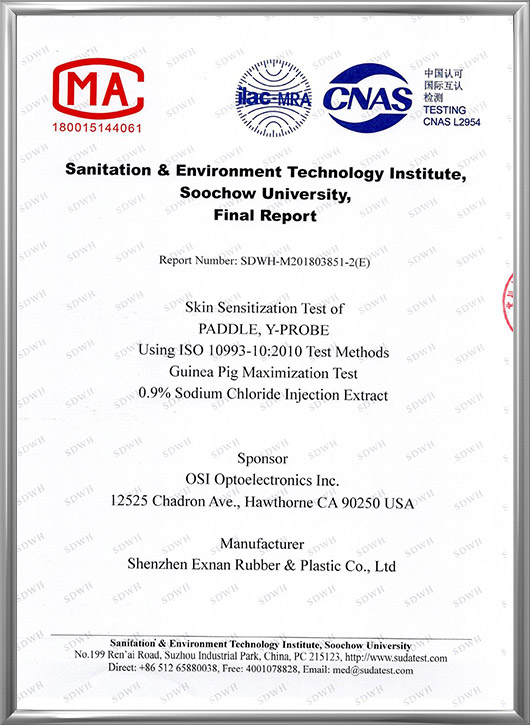
Skin sensitization test in guinea pigs using the maximization method with 0.9% sodium chloride injec
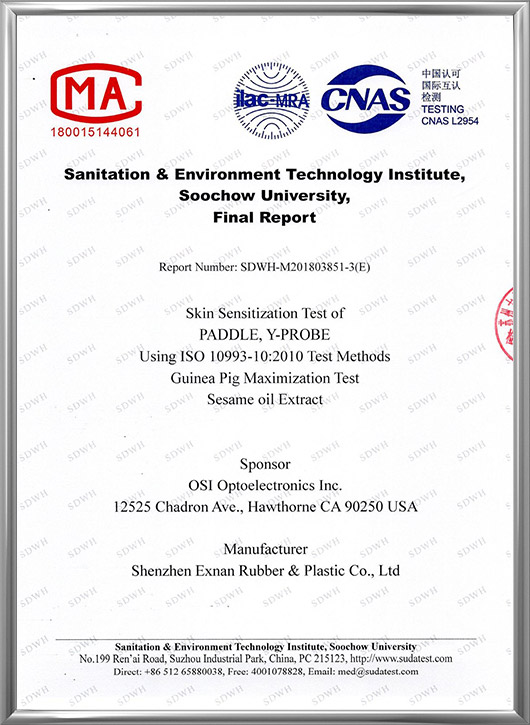
Skin sensitization test in guinea pigs:maximization method with sesame oil extraction
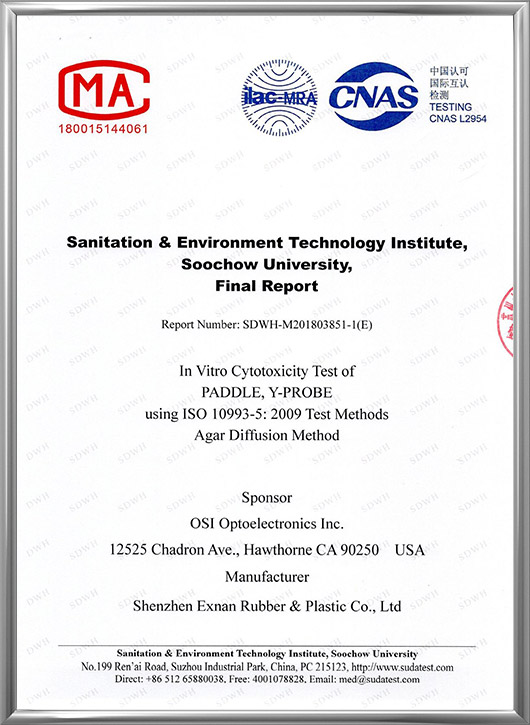
Cell toxicity test:agar diffusion method
Cooperating customers
Till now, Exnan products has been exports 35 countries, and more than 500 Medical equipment factory, health care companies, hospitals, clinics use our products, and win good reputation.










New
Our silicone accessories meet international medical standards through strict quality control.
Ensure patient safety with our premium products. Explore our catalog today!
News
Our silicone accessories meet international medical standards through strict quality control.
Ensure patient safety with our premium products. Explore our catalog today!
-

How do you make silicone more durable?
Plasticizers, commonly incorporated into silicone rubber, enhance flexibility and durability by reducing its glass transition temperature (Tg). This results in increased pliability and resistance to cracking or tearing.
MORE -

Reducing Assembly Time by 40% with Custom Silicone Connectors
Have you ever wanted to make assembly faster without losing quality? Custom silicone connectors help by making parts easier to join, which is essential for reducing assembly time. Their special design reduces the number of parts needed, making the process more efficient.
MORE -

How to conduct an ISO 13485 audit?
Key phases for conducting an ISO 13485 internal audit: 1. Develop documented procedures for internal audits. 2. Create and maintain a program specifying the audit schedule. 3. Execute the audits according to the established plan. 4. Maintain documented evidence of both the audit plan and its execution. 5. Implement corrections to address identified nonconformities and eliminate their root causes. 6. Verify the effectiveness of the actions taken to resolve nonconformities.
MORE -

The Nitty-Gritty Guide to Auditing Your Silicone Supplier's ISO 13485 Compliance
Ever lay awake wondering if your silicone supplier’s ISO 13485 compliance is rock-solid? Or worse—discovered gaps after production started? You’re not alone. As fellow medical device folks, we’ve seen how supplier slips cascade into FDA audits gone sour. Here’s how to avoid becoming a cautionary tale.
MORE -

Beyond Recalls: How Batch Traceability Secures Medical-Grade Silicone Supply Chains & Protects Patients
Let's be honest, folks working in medical devices: few things send a chill down your spine faster than the phrase "product recall." The damage isn't just financial – it’s your hard-earned reputation and, critically, patient safety at stake. And often, that weak link? It’s in the silicone components.
MORE -

Batch Traceability in Silicone Production: Your Shield Against Recalls & Quality Headaches
Hey there, medical device manufacturers across the pond! Let's talk about something that keeps operations folks up at night: product recalls. Especially when you're dealing with critical components like medical-grade silicone accessories. One weak link, one contaminated batch, and suddenly, your hard-earned brand reputation and bottom line are on the line.
MORE -

What is the difference between RoHS compliant and REACH?
Gamma radiation can sterilize objects sealed in impermeable packaging because it penetrates deeply.
MORE -

Autoclave vs. Gamma Radiation: Essential Guide to Sterilization Compatibility for Medical Silicone Components (2026)
So, you’re designing a medical device with silicone seals, gaskets, or plungers. Fantastic! Silicone’s biocompatibility and flexibility make it a superstar material. But here’s the million-dollar question that keeps engineers and procurement managers up at night:
MORE
Recent News
—
Welcome to contact us
If you have any questions, please fill in the relevant information. Weare very willing to provide more information and a full range ofservices for both you and your company
Welcome to contact us
If you have any questions, please fill in the relevant information. Weare very willing to provide more information and a full range ofservices for both you and your company
EXNAN

点击右上角
分享给朋友吧
Copyright © 2004-2024 Guangdong Exnan Technology Co.,Ltd
点击右上角
分享给朋友吧
Copyright © 2004-2024 Guangdong Exnan Technology Co.,Ltd

 +86-0752-3869959 / 3869960
 +86 180 0752 8206
 Building 8, China-Korea Emerging Intelligent Manufacturing Industrial Park, No.27, Songbailing Road, China-Korea (Huizhou) Industrial Park, Zhongkai Area, Huizhou City, Guangdong Province, China

WeChat scan
