

Contact Us
lf you have any queries, get in touch today! Don't hesitate, We try to take the extra step forour customer satisfaction.

Hey there, I’m Steve!
I’m the sales manager of exnan medical silicone. I have been in this field for more than ten years. If you are looking for custom-made silicone rubber products, feel free to ask me any questions.
"
Our certificate
Possess 800 square meters of Class 10,000 dust-free workshop, Passed ISO9001:2015 quality management system certification and ISO13485:2016 medical device quality management system, and its products have obtained multiple biocompatibility tests, US FDA and EU LFGB certifications.
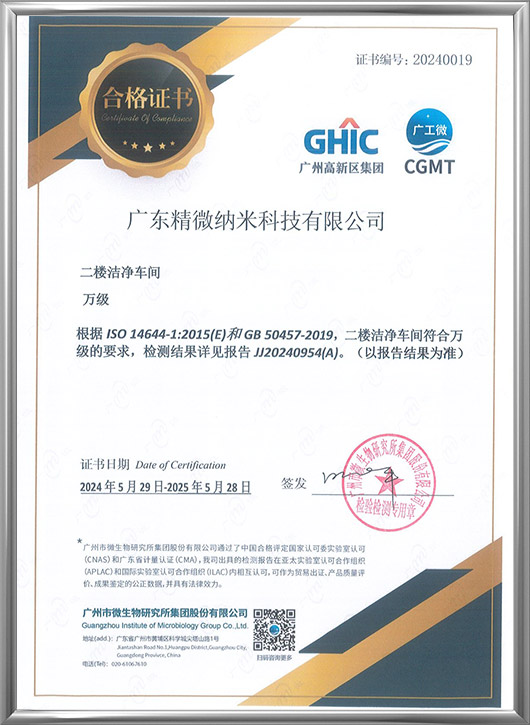
Class 10,000 cleanroom certification
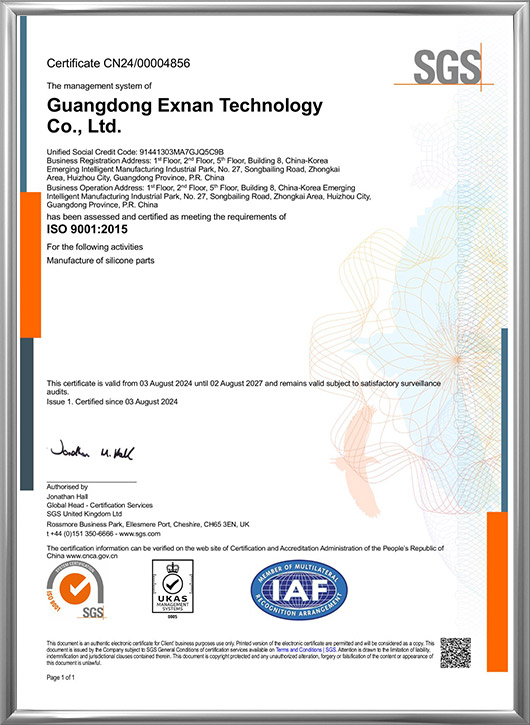
ISO 9001:2015
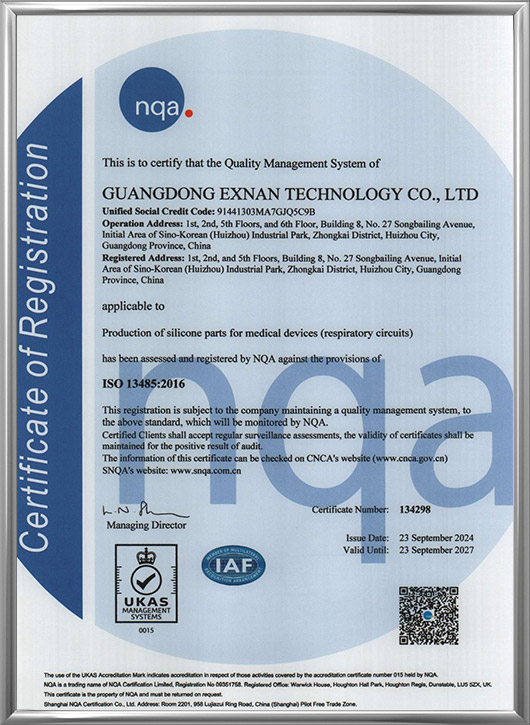
ISO 13485:2016
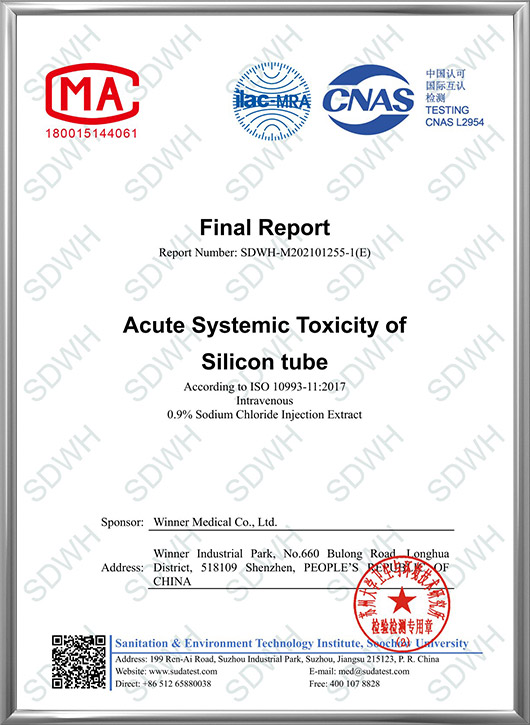
ISO 10993-11:2017 Tail vein injection
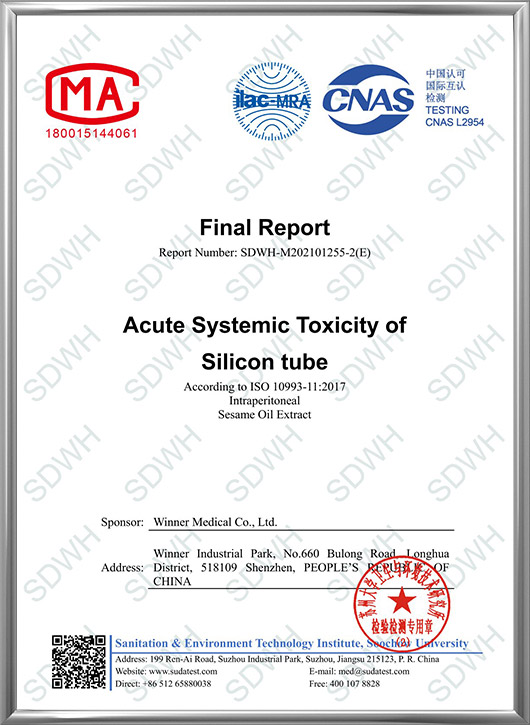
ISO 10993-11:2017 Intraperitoneal injection
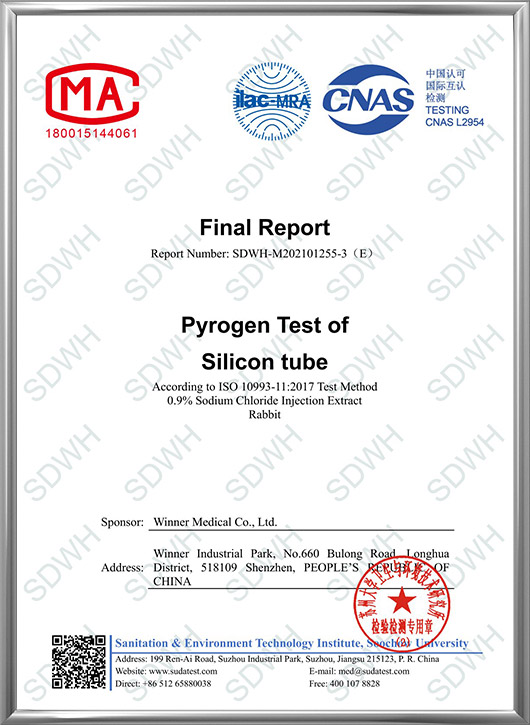
ISO 10993-11:2017 Pyrogens
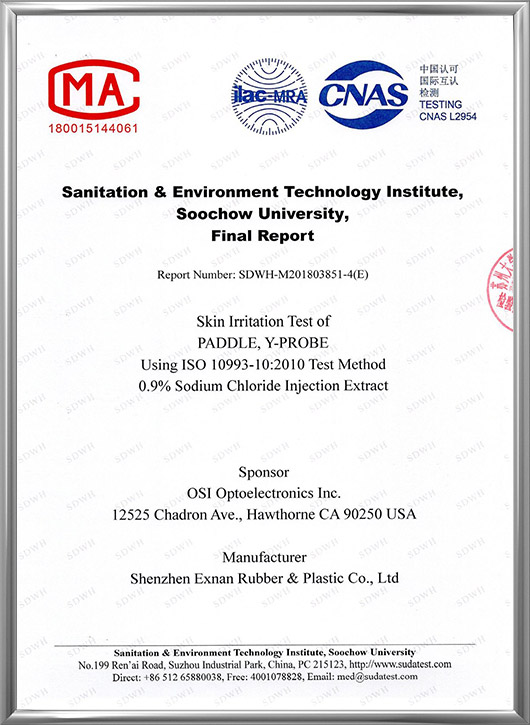
Skin irritation test for extract of 0.9% sodium chloride injection
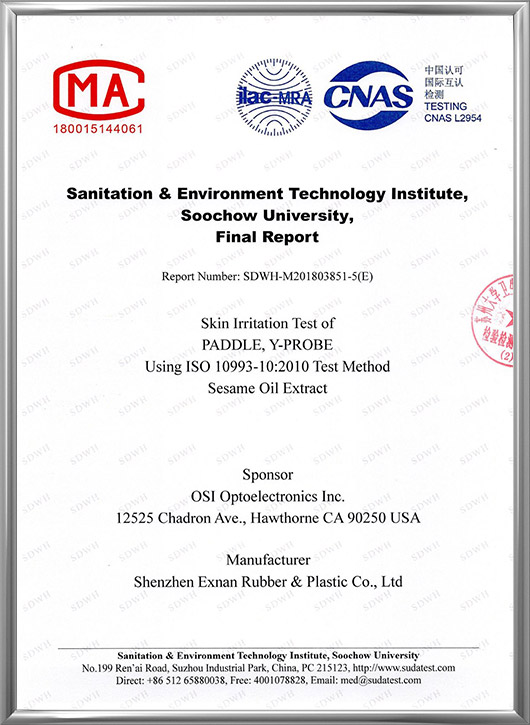
Skin irritation test for sesame oil extraction
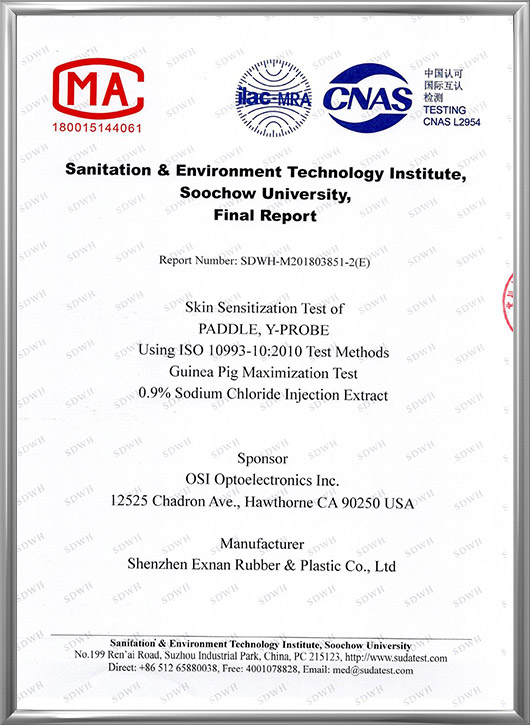
Skin sensitization test in guinea pigs using the maximization method with 0.9% sodium chloride injec
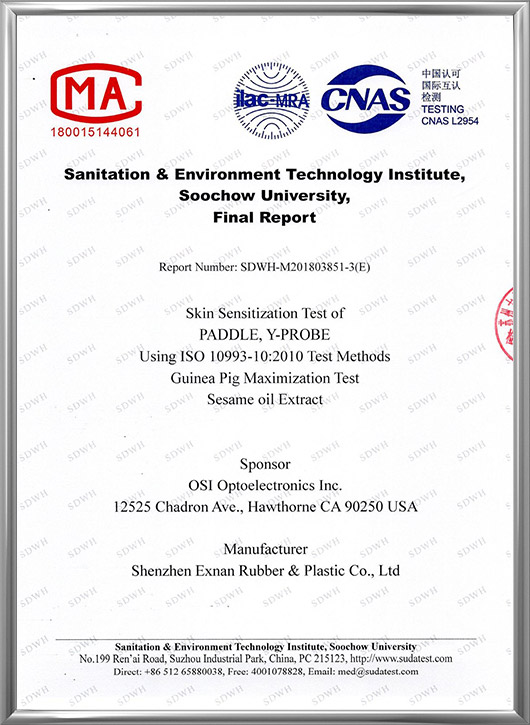
Skin sensitization test in guinea pigs:maximization method with sesame oil extraction
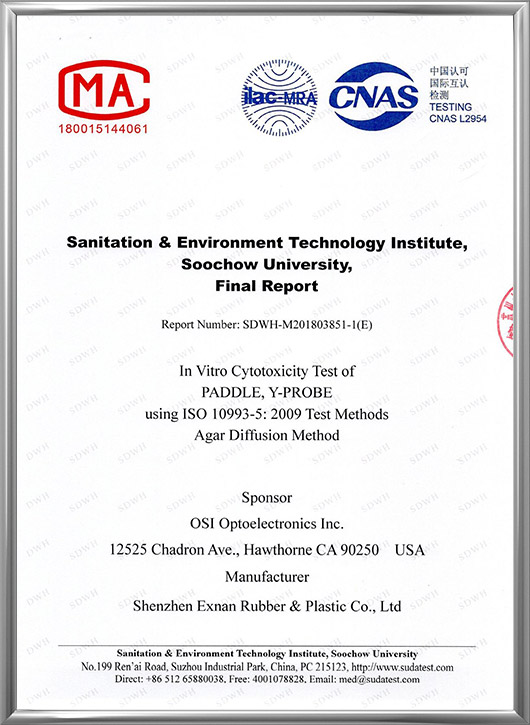
Cell toxicity test:agar diffusion method
Cooperating customers
Till now, Exnan products has been exports 35 countries, and more than 500 Medical equipment factory, health care companies, hospitals, clinics use our products, and win good reputation.














New
Our silicone accessories meet international medical standards through strict quality control.
Ensure patient safety with our premium products. Explore our catalog today!
News
Our silicone accessories meet international medical standards through strict quality control.
Ensure patient safety with our premium products. Explore our catalog today!
Why Customization Is the Future of Medical Silicone Components – And Why Off-the-Shelf Parts Are Losing Ground
Time: 2026-04-23 13:58:00
Author: Amber
Click:
Off-the-shelf silicone parts hide risks in performance, compliance, and total cost. Medical devices need precision – not “almost.” Custom-engineered components fit your design exactly, ensure full biocompatibility documentation (ISO 10993, FDA MAF), and reduce assembly defects. Customization turns a simple part into a strategic asset. For medical device manufacturers, it is no longer a luxury – it is a necessity.
Off-the-shelf (OTS) silicone components appear convenient and cost-effective. For many industrial applications, they work just fine. But for medical devices – where reliability, biocompatibility, and long-term performance are non‑negotiable – “close enough” is a quiet risk that often costs far more than the price tag suggests.
Here is why OTS silicone parts are steadily losing ground, and why customization is becoming the new standard for serious medical device manufacturers.
1. The Performance Gap: “Almost” Is Not Acceptable in Medicine
Catalog parts are designed for average applications. A standard silicone seal, for example, is made with a generic compression set requirement, a broad durometer range, and typical tensile strength. Your device, however, may need:
- A very specific compression force to maintain a sterile barrier after 1,000 cycles.
- A lower durometer for a soft tissue interface, but with high tear resistance.
- Consistent friction behavior for a drug delivery pump.
With OTS parts, you get what is available – not what is optimal. The result is often higher failure rates during validation, unpredictable performance in the field, and expensive design iterations late in development.
Customization eliminates these trade‑offs. We formulate the silicone compound, control the curing process, and design the geometry precisely for your mechanical and environmental requirements.
2. Your Design Should Not Be Held Hostage by a Catalog
When engineers rely on standard silicone components, they unconsciously compromise their device architecture. The OTS part dictates the groove size, the wall thickness, and even the assembly method. This often leads to:
- Larger device footprints than necessary.
- Extra sealing features or redundant components.
- Limited ability to integrate multiple functions (e.g., sealing + electrical insulation + fluid path).
In contrast, a custom silicone component is designed around your device, not the other way around. It allows you to miniaturize, reduce part count, and achieve multi‑material integration (silicone overmolded onto plastic or metal). This is not a luxury – it is a competitive necessity, especially in minimally invasive surgery, wearable medical devices, and implantable systems.
3. Regulatory and Compliance Risks That Grow Over Time
Medical grade silicone is not a single material. Biocompatibility depends on the exact formulation, process aids, post‑curing, and cleanliness. Off‑the‑shelf parts rarely come with a complete regulatory package, including:
- ISO 10993‑5 (cytotoxicity)
- ISO 10993‑10 (irritation and sensitization)
- ISO 10993‑11 (systemic toxicity)
- USP Class VI (for prolonged contact)
- FDA Drug or Device Master File (MAF)
If you source OTS parts from different batches – or different suppliers – you may unknowingly introduce material variations that compromise your 510(k) or CE‑MDR submission. Worse, a change in your supplier’s raw material could force you to re‑validate your device.
Customization with a reliable partner like EXNAN means full material traceability, dedicated batch records, and regulatory documentation aligned with your submission strategy. You own the specification; you are not at the mercy of a catalog revision.
4. Total Cost of Ownership: Why “Cheap” Is Expensive
Purchasing managers often focus on unit price. But the real cost of a silicone component includes:
- Assembly time (poor fit requires rework or selective assembly)
- In‑process rejects (dimensional variation from worn OTS tooling)
- Field returns (premature fatigue or leakage)
- Inventory waste (minimum order quantities for standard parts, many of which become obsolete)
Custom tooling and validated processes reduce these hidden costs dramatically. Many EXNAN clients achieve a 20–30% reduction in assembly defects and near‑zero field failures related to silicone parts. The initial investment in custom tooling is typically recovered within the first production year – and every year after that is pure gain.
5. Differentiation – The Only Sustainable Advantage in Medical Devices
Finally, consider brand and market positioning. If your competitor uses the same catalog seal or gasket, your device’s performance in that critical sub‑system is identical. There is no technical moat.
Custom silicone components allow you to engineer a unique sealing curve, a special tactile feel, or a multi‑functional elastomeric part that nobody else can copy. In a market where regulatory pathways are similar and hardware is increasingly commoditized, these small differences become the reason clinicians and hospital buyers choose your device.
Conclusion: From Commodity to Strategic Asset
Off‑the‑shelf silicone components are not going to disappear. But for medical devices that aim for regulatory clearance, clinical differentiation, and long‑term reliability, they are no longer a smart choice.
Customization turns a simple part into a strategic asset – one that lowers total cost, reduces regulatory risk, and strengthens your competitive position.
At EXNAN, we do not sell from a catalog. We engineer medical‑grade silicone solutions for your device alone. From material selection and tooling to validated production and regulatory support, we build components that work exactly as you need – not “almost.”
Need a custom silicone solution? We’re here to help. Visit us: www.exnan.com

点击右上角
分享给朋友吧







 Long by picture save/share
0
文章推荐
Silicone Parts Fail After Sterilization: 5 Proven Fixes
Medical Silicone vs. TPE/TPU: Why Is Silicone Still the Preferred Material for Medical Consumables?
Medical Silicone Mold Design: The First Gateway to Product Precision
New Requirements of ISO13485:2016 for Medical Silicone Suppliers
Medical Silicone Consumables Market Sees New Growth: Respiratory Equipment Drives Demand for Precision Components
Related news recommendations —
Related Products —


News Products —



INQUIRY


Add Successfully

Hey there, I’m Steve!
15+ years in medical silicone accessories, linking manufacturers and healthcare providers for compliant, high-quality products. Trusted advisor focused on innovation and patient care. If you are looking for custom-made silicone rubber products, feel free to ask me any questions.
Hey there, I’m Steve!
15+ years in medical silicone accessories, linking manufacturers and healthcare providers for compliant, high-quality products. Trusted advisor focused on innovation and patient care. If you are looking for custom-made silicone rubber products, feel free to ask me any questions.
Welcome to contact us
If you have any questions, please fill in the relevant information. Weare very willing to provide more information and a full range ofservices for both you and your company
Welcome to contact us
If you have any questions, please fill in the relevant information. Weare very willing to provide more information and a full range ofservices for both you and your company
EXNAN
点击右上角
分享给朋友吧
Copyright © 2004-2024 Guangdong Exnan Technology Co.,Ltd
点击右上角
分享给朋友吧
Copyright © 2004-2024 Guangdong Exnan Technology Co.,Ltd

 +86-0752-3869959 / 3869960
 +86 180 0752 8206
 Building 8, China-Korea Emerging Intelligent Manufacturing Industrial Park, No.27, Songbailing Road, China-Korea (Huizhou) Industrial Park, Zhongkai Area, Huizhou City, Guangdong Province, China

WeChat scan
