

Contact Us
lf you have any queries, get in touch today! Don't hesitate, We try to take the extra step forour customer satisfaction.

Hey there, I’m Steve!
I’m the sales manager of exnan medical silicone. I have been in this field for more than ten years. If you are looking for custom-made silicone rubber products, feel free to ask me any questions.
"
Our certificate
Possess 800 square meters of Class 10,000 dust-free workshop, Passed ISO9001:2015 quality management system certification and ISO13485:2016 medical device quality management system, and its products have obtained multiple biocompatibility tests, US FDA and EU LFGB certifications.
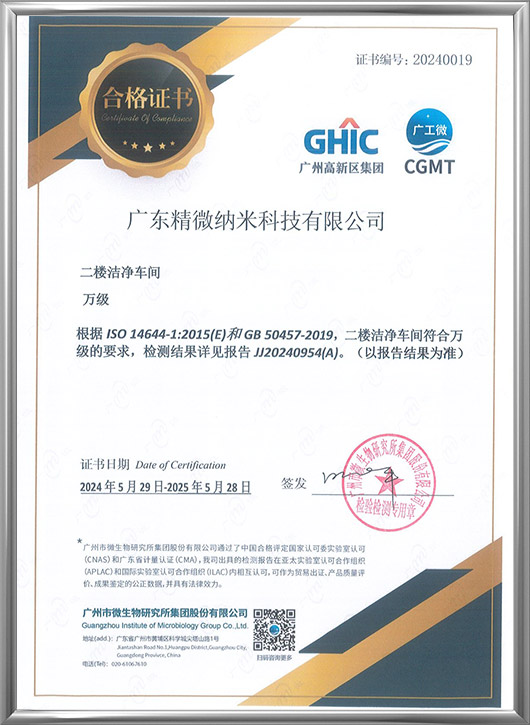
Class 10,000 cleanroom certification
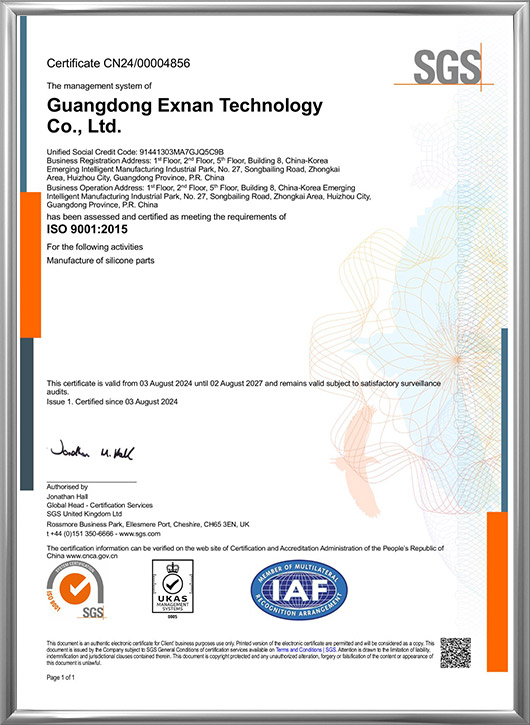
ISO 9001:2015
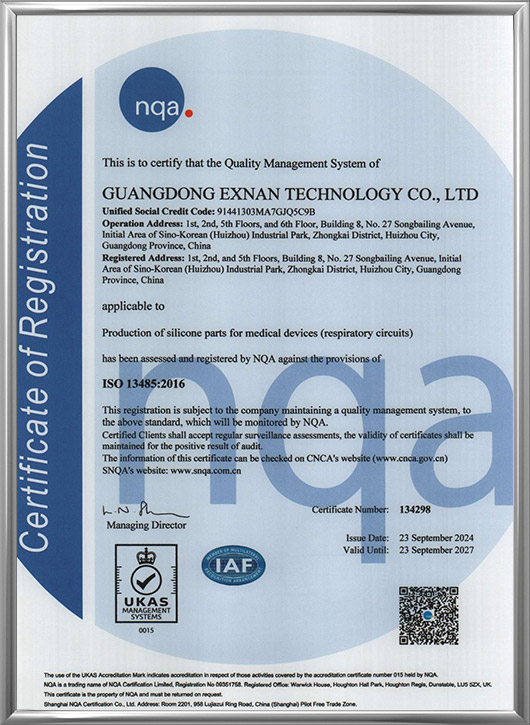
ISO 13485:2016
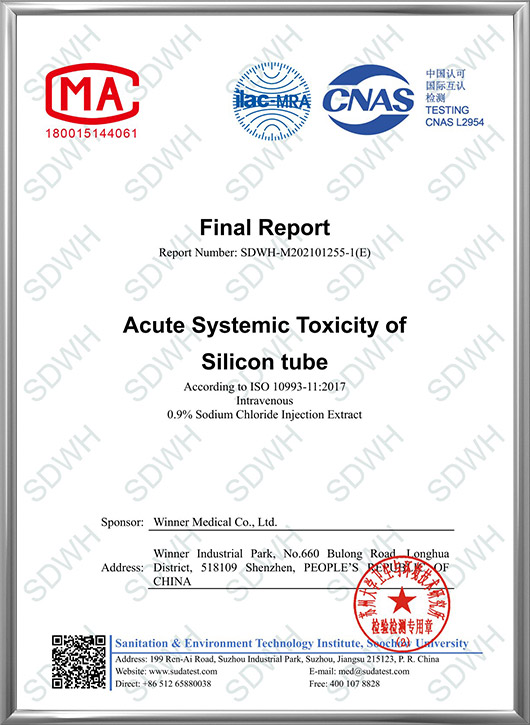
ISO 10993-11:2017 Tail vein injection
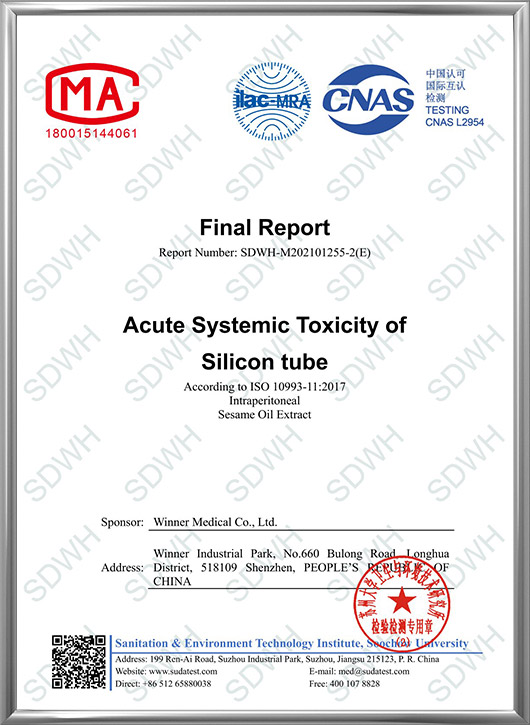
ISO 10993-11:2017 Intraperitoneal injection
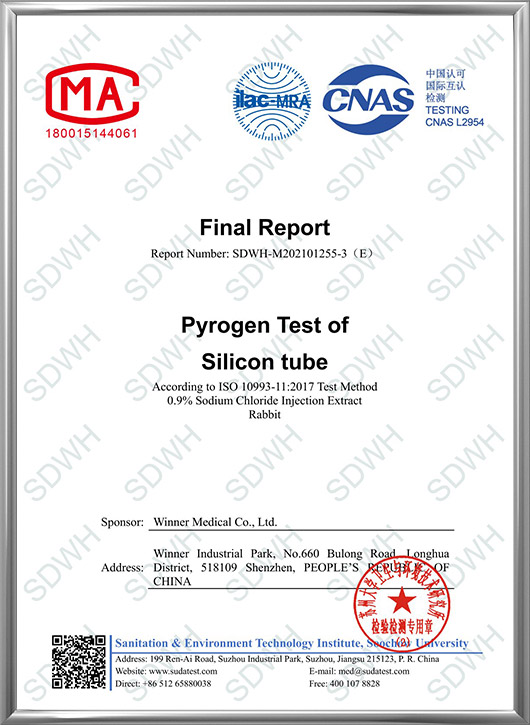
ISO 10993-11:2017 Pyrogens
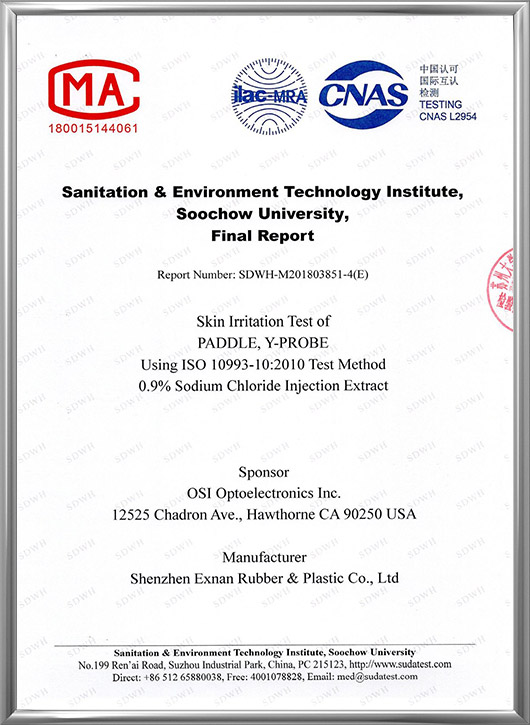
Skin irritation test for extract of 0.9% sodium chloride injection
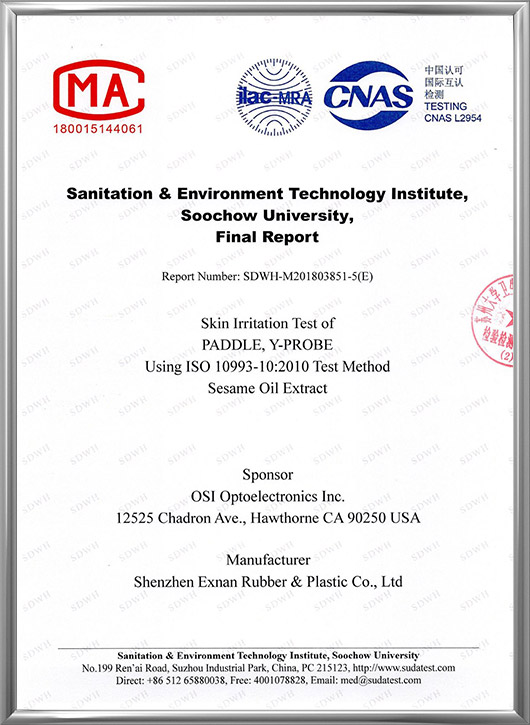
Skin irritation test for sesame oil extraction
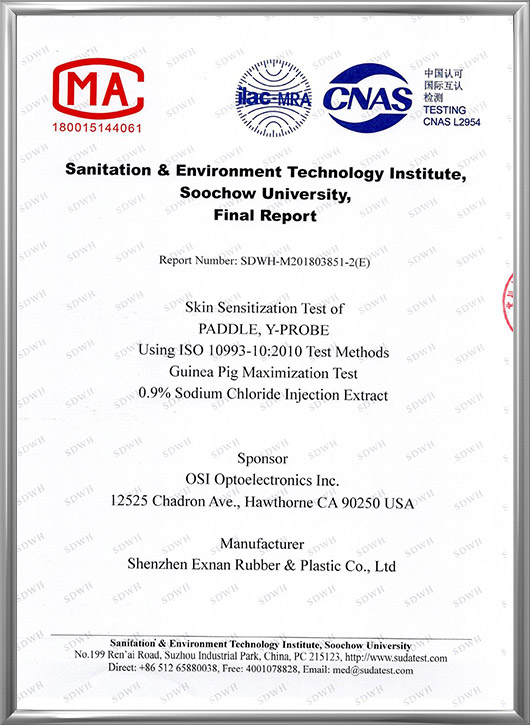
Skin sensitization test in guinea pigs using the maximization method with 0.9% sodium chloride injec
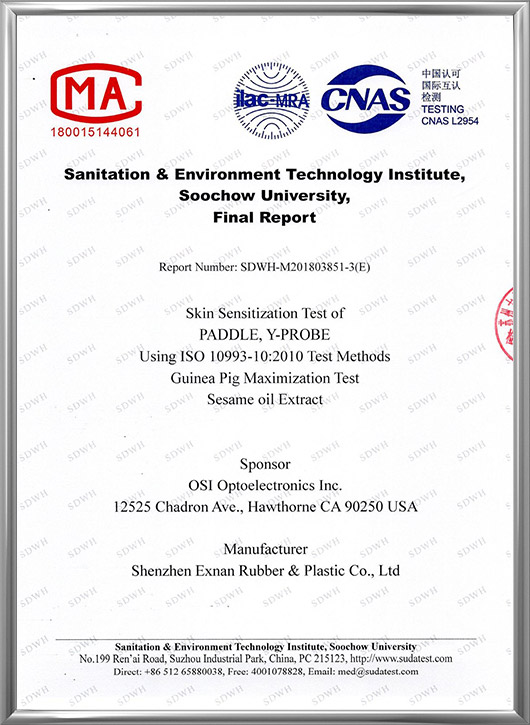
Skin sensitization test in guinea pigs:maximization method with sesame oil extraction
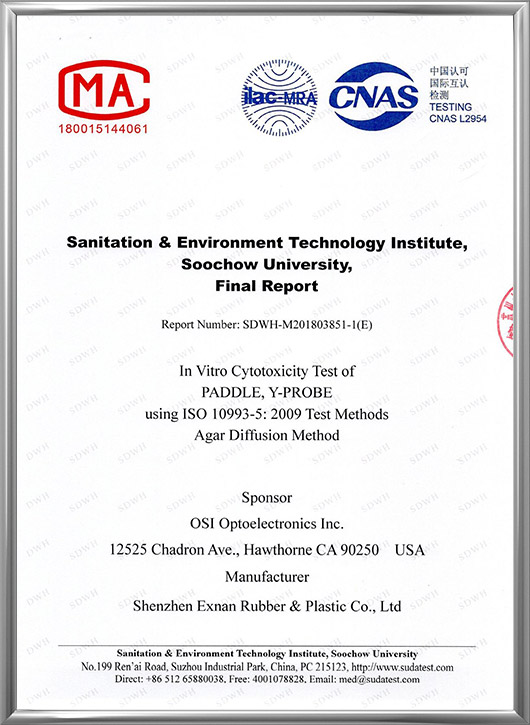
Cell toxicity test:agar diffusion method
Cooperating customers
Till now, Exnan products has been exports 35 countries, and more than 500 Medical equipment factory, health care companies, hospitals, clinics use our products, and win good reputation.




















New
Our silicone accessories meet international medical standards through strict quality control.
Ensure patient safety with our premium products. Explore our catalog today!
News
Our silicone accessories meet international medical standards through strict quality control.
Ensure patient safety with our premium products. Explore our catalog today!
Design and Testing Methods for Medical Device Silicone Parts
Time: 2025-01-13 15:04:13
Author: Guangdong Exnan Technology Co.,Ltd
Click:
Hey there! If you're involved in the medical device industry, you know how crucial silicone parts are. They play a vital role in ensuring the reliability and safety of your devices. This article is all about the design and testing methods that help you get the most out of your silicone parts.

1. Introduction
Hey there! If you're involved in the medical device industry, you know how crucial silicone parts are. They play a vital role in ensuring the reliability and safety of your devices. This article is all about the design and testing methods that help you get the most out of your silicone parts. We'll cover everything from material selection to advanced testing techniques, and even throw in some real-world examples.
2. Importance of Silicone in Medical Devices
Silicone is no ordinary material. It's biocompatible, flexible, and durable, making it a go-to choice for medical applications. Here are some of its key properties:
- iocompatibility: Silicone is non-toxic and doesn't cause allergic reactions, making it safe for use in devices that come into contact with the human body.
- Flexibility: It can stretch and bend without breaking, which is perfect for catheters and other flexible components.
- Durability: Silicone can withstand harsh conditions, including repeated sterilization and exposure to bodily fluids.
You'll find silicone in a variety of medical devices, such as:
- Catheters
- Seals and gaskets
- Adhesives
But here's the catch: regulatory requirements. Medical-grade silicone needs to meet specific standards. For instance, ISO 10993 and USP Class VI are essential for biocompatibility testing. Make sure your silicone parts comply with these standards to avoid any issues down the line.
3. Design Considerations for Medical Device Silicone Parts
Let's dive into the nitty-gritty of designing your silicone parts.
Material Selection
Choosing the right silicone is crucial. Here's what you need to consider:
- Grade and Purity: High-purity, medical-grade silicone is a must. It should be free from contaminants and have low volatility.
- Compliance with ISO and USP Standards: Ensure your silicone meets international standards for medical use.
| Consideration | Importance |
| Grade and Purity | Ensures safety and performance |
| ISO and USP Compliance | Meets regulatory requirements |

Mechanical Properties
Silicone's mechanical properties are key to its performance:
- Flexibility and Elongation: Measure how much the silicone can stretch before breaking.
- Tensile Strength and Tear Resistance: Assess the material's strength under tension and its resistance to tearing.
| Property | Test Method | Significance |
| Flexibility | Elongation testing | Ensures durability in flexible applications |
| Tensile Strength | Tensile testing | Measures resistance to breaking under tension |
| Tear Resistance | Tear strength testing | Evaluates resistance to tearing |
Thermal Properties
Silicone's ability to withstand heat is another critical factor:
- Heat Resistance: How well the material can handle high temperatures.
- Thermal Stability: Whether it maintains its properties over time when exposed to heat.
| Property | Test Method | Significance |
| Heat Resistance | Thermal cycling testing | Ensures survivability in high-temperature environments |
| Thermal Stability | Differential scanning calorimetry (DSC) | Checks for changes in material properties over time |
Chemical Resistance
Medical devices often need to be sterilized and may come into contact with various chemicals:
- Sterilization Resistance: Can the silicone withstand methods like autoclaving and gamma radiation?
- Compatibility with Bodily Fluids and Pharmaceuticals: Does it react with these substances?
| Property | Test Method | Significance |
| Sterilization Resistance | Autoclaving, gamma radiation testing | Ensures long-term use and safety |
| Chemical Compatibility | Chemical resistance testing | Prevents harmful reactions |

Surface Finish and Texture
The surface of your silicone parts can affect adhesion and seal integrity:
- Smoothness and Roughness: Smooth surfaces can help with adhesion, while roughness can enhance seal integrity.
- Wettability: How well the silicone can adhere to the substrate.
| Property* | Test Method | Significance |
| Surface Finish | Surface roughness measurement | Influences adhesion and seal integrity |
| Wettability | Contact angle measurement | Ensures good adhesion |
Manufacturing Processes
Finally, the manufacturing process can make or break your silicone parts:
- Molding and Extrusion Techniques: Precision and consistency are key.
- Quality Control: Regular checks to ensure every part meets your standards.
| Process | Description | Significance |
| Molding | Forming silicone into specific shapes | Ensures dimensional accuracy |
| Extrusion | Pushing silicone through a die to create profiles | Suitable for long, continuous parts |
| Quality Control | Regular inspection and testing during production | Maintains high standards |
4. Surface Preparation and Adhesion
Prepping the surface is essential for getting the best adhesion from your silicone parts.
Substrate Cleaning
Cleaning is the first step to ensure a good bond:
- Importance: Contaminants can weaken adhesion.
- Common Methods:
- Solvent Cleaning: Uses solvents to remove oils and dirt.
- Plasma Cleaning: Uses ionized gas to clean and activate surfaces.
| Method | Description | Significance |
| Solvent Cleaning | Removes oils and dirt using solvents | Ensures a clean surface for bonding |
| Plasma Cleaning | Uses ionized gas to clean and activate surfaces | Enhances adhesion and durability |
Substrate Surface Finish
The surface texture can greatly affect adhesion:
- Effect on Wettability and Adhesion: A smoother surface generally promotes better adhesion.
- Recommended Surface Roughness Levels: Typically, a roughness of 0.5 to 1.0 μm is ideal.
| Surface Finish | Recommended Roughness | Significance |
| Smooth | 0.5 to 1.0 μm | Enhances adhesion |
| Rough | >1.0 μm | Improves seal integrity |

Contact Angle Measurement
This test helps you understand how well the silicone will adhere:
- Definition: The angle at which a liquid droplet meets a solid surface.
- Significance: A lower contact angle indicates better wettability and adhesion.
| Measurement | Significance |
| Contact Angle | Lower angles indicate better adhesion |
Surface Treatments
Enhance adhesion with these treatments:
- Plasma Treatment: Uses ionized gas to modify the surface.
- Corona Discharge: Uses high voltage to clean and activate the surface.
- Adhesive Primers: Apply a primer to enhance adhesion.
| Treatment | Description | Significance |
| Plasma Treatment | Modifies surface with ionized gas | Enhances adhesion |
| Corona Discharge | Cleans and activates surface with high voltage | Improves bond strength |
| Adhesive Primers | Applied to enhance adhesion | Ensures a strong bond |
5. Testing Methods for Medical Device Silicone Parts
Once you've designed and prepped your silicone parts, it's time to put them to the test.
Physical Testing
- Tensile Testing: Measures the strength of the material under tension.
- Elongation Testing: Assesses how much the material can stretch.
- Tear Strength Testing: Evaluates resistance to tearing.
| Test | Method | Significance |
| Tensile Testing | ASTM D412 | Measures strength under tension |
| Elongation Testing | ASTM D412 | Assesses stretchability |
| Tear Strength Testing | ASTM D624 | Evaluates tear resistance |
Mechanical Testing
- Flexural Testing: Measures the material's ability to bend.
- Impact Resistance Testing: Evaluates resistance to impact.
| Test | Method | Significance |
| Flexural Testing | ASTM D790 | Assesses flexibility and rigidity |
| Impact Resistance Testing | ASTM D256 | Evaluates durability under impact |
Chemical Testing
- Extractables and Leachables Testing: Identifies any substances that can be extracted from the silicone.
- Chemical Resistance Testing: Assesses resistance to various chemicals.
| Test | Method | Significance |
| Extractables and Leachables Testing | ISO 10993-18 | Ensures no harmful substances are released |
| Chemical Resistance Testing | ASTM D543 | Evaluates compatibility with chemicals |
Biological Testing
- Biocompatibility Testing: Ensures the material is safe for use in the human body.
- Cytotoxicity, Sensitization, and Irritation Testing: Checks for any harmful effects on living tissue.
| Test | Method | Significance |
| Biocompatibility Testing | ISO 10993-1 | Ensures the material is safe for medical use |
| Cytotoxicity Testing | ISO 10993-5 | Checks for cell toxicity |
| Sensitization Testing | ISO 10993-10 | Evaluates skin sensitization |
| Irritation Testing | ISO 10993-10 | Checks for skin irritation |
Adhesion Testing
- Lap Shear Test: Measures the strength of the bond under shear force.
- Peel Strength Test: Assesses the strength of the bond when peeled from the substrate.
- Peel Strength of Cured Bilayers from Silicone Dispersions: Evaluates the adhesion of cured layers.
| Test | Method | Significance |
| Lap Shear Test | ASTM D1002 | Measures bond strength under shear force |
| Peel Strength Test | ASTM D3330 | Evaluates bond strength when peeled |
| Peel Strength of Cured Bilayers | Custom method | Ensures strong adhesion in complex structures |
Sterilization Testing
- Autoclaving: High-temperature and high-pressure steam sterilization.
- Gamma Radiation: Uses gamma rays to sterilize.
- Ethylene Oxide (EtO) Testing: Uses ethylene oxide gas to sterilize.
| Method | Description | Significance |
| Autoclaving | High-temperature steam | Ensures resistance to high-temperature sterilization |
| Gamma Radiation | High-energy gamma rays | Evaluates resistance to radiation |
| Ethylene Oxide (EtO) | Gas sterilization | Checks for resistance to EtO sterilization |

Environmental Testing
- UV Resistance Testing: Measures resistance to UV light.
- Aging and Weathering Testing: Evaluates long-term durability in various conditions.
| Test | Method | Significance |
| UV Resistance Testing | ASTM G154 | Ensures stability under UV exposure |
| Aging and Weathering Testing | ASTM G155 | Evaluates long-term durability |
6. Case Studies and Examples
Let's look at some real-world examples to see how these design and testing methods come into play.
Case Study 1: Catheter Design and Testing
- Material Selection: High-purity, medical-grade silicone.
- Surface Preparation: Plasma cleaning and corona discharge.
- Adhesion Testing: Lap shear and peel strength tests.
| Test | Result |
| Lap Shear Test | 15 MPa |
| Peel Strength Test | 1.5 N/mm |
Case Study 2: Silicone Seals for Implantable Devices
- Design Considerations: Mechanical strength, thermal stability.
- Testing Methods: Tensile testing, tear strength testing, biocompatibility testing.
- Testing Results: Meet all ISO and USP standards.
| Test | Result |
| Tensile Test | 10 MPa |
| Tear Strength Test | 20 N/mm |
| Biocompatibility | ISO 10993-1 compliant |
Case Study 3: Silicone Adhesives in Transdermal Patches
- Biocompatibility and Purity Requirements: USP Class VI and ISO 10993-5.
- Adhesion Testing: Peel strength of cured bilayers from silicone dispersions.
| Test | Result |
| Peel Strength Test | 2.0 N/mm |
| Biocompatibility | USP Class VI compliant |
7. Collaboration with Silicone Adhesive Manufacturers
Working with the right manufacturer can make a huge difference. Here's why:
- Benefits of Experienced Manufacturers: They have the expertise to guide you through the design and testing process.
- Customization and Product Development Services: From molecular level customization to specialized packaging.
- Regulatory Support and Master Files: Access to detailed regulatory information to support your filings.
- Advanced Manufacturing Processes and Equipment: State-of-the-art facilities to produce high-quality silicone parts.
Meet EXNAN, a leading manufacturer of medical-grade silicone adhesives. They offer a wide range of services, including:
- Custom Formulation: Tailored to your specific needs.
- Regulatory Support: Extensive master files and GMP compliance.
- Technical Expertise: Experienced chemists and engineers to help you every step of the way.
8. Conclusion
To sum it up, designing and testing medical device silicone parts is a comprehensive process. From material selection to environmental testing, each step is crucial for ensuring the reliability and safety of your devices. Collaboration with a trusted manufacturer like EXNAN can give you a competitive edge and help you meet strict design and production parameters.
So, whether you're working on catheters, transdermal patches, or implantable devices, make sure to follow these guidelines to get the best results. Your patients and regulatory bodies will thank you!
---
If you have any questions or need more detailed information, feel free to reach out to us or visit EXNAN's website. We're here to help!
References
- ASTM D412 Standard Test Methods for Vulcanized Rubber and Thermoplastic Elastomers—Tension

点击右上角
分享给朋友吧







 Long by picture save/share
0
文章推荐
Silicone Parts Fail After Sterilization: 5 Proven Fixes
Medical Silicone vs. TPE/TPU: Why Is Silicone Still the Preferred Material for Medical Consumables?
Medical Silicone Mold Design: The First Gateway to Product Precision
New Requirements of ISO13485:2016 for Medical Silicone Suppliers
Medical Silicone Consumables Market Sees New Growth: Respiratory Equipment Drives Demand for Precision Components
Related news recommendations —
Related Products —




News Products —
INQUIRY


Add Successfully

Hey there, I’m Steve!
15+ years in medical silicone accessories, linking manufacturers and healthcare providers for compliant, high-quality products. Trusted advisor focused on innovation and patient care. If you are looking for custom-made silicone rubber products, feel free to ask me any questions.
Hey there, I’m Steve!
15+ years in medical silicone accessories, linking manufacturers and healthcare providers for compliant, high-quality products. Trusted advisor focused on innovation and patient care. If you are looking for custom-made silicone rubber products, feel free to ask me any questions.
Welcome to contact us
If you have any questions, please fill in the relevant information. Weare very willing to provide more information and a full range ofservices for both you and your company
Welcome to contact us
If you have any questions, please fill in the relevant information. Weare very willing to provide more information and a full range ofservices for both you and your company
EXNAN
点击右上角
分享给朋友吧
Copyright © 2004-2024 Guangdong Exnan Technology Co.,Ltd
点击右上角
分享给朋友吧
Copyright © 2004-2024 Guangdong Exnan Technology Co.,Ltd

 +86-0752-3869959 / 3869960
 +86 180 0752 8206
 Building 8, China-Korea Emerging Intelligent Manufacturing Industrial Park, No.27, Songbailing Road, China-Korea (Huizhou) Industrial Park, Zhongkai Area, Huizhou City, Guangdong Province, China

WeChat scan
