

Contact Us
lf you have any queries, get in touch today! Don't hesitate, We try to take the extra step forour customer satisfaction.

Hey there, I’m Steve!
I’m the sales manager of exnan medical silicone. I have been in this field for more than ten years. If you are looking for custom-made silicone rubber products, feel free to ask me any questions.
"
Our certificate
Possess 800 square meters of Class 10,000 dust-free workshop, Passed ISO9001:2015 quality management system certification and ISO13485:2016 medical device quality management system, and its products have obtained multiple biocompatibility tests, US FDA and EU LFGB certifications.
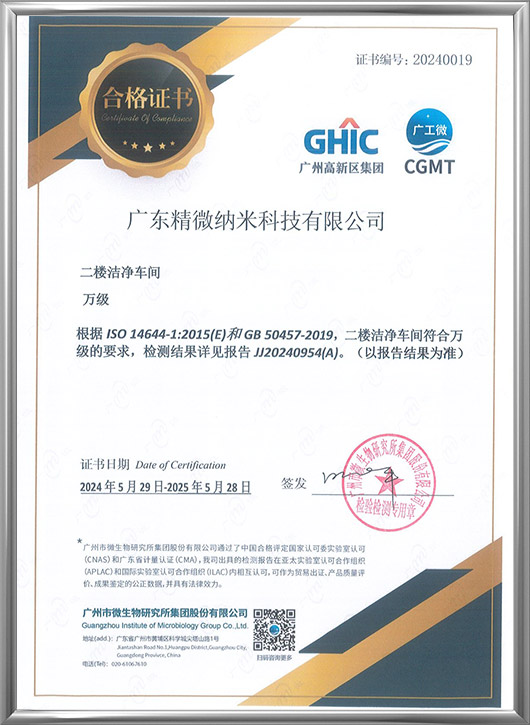
Class 10,000 cleanroom certification
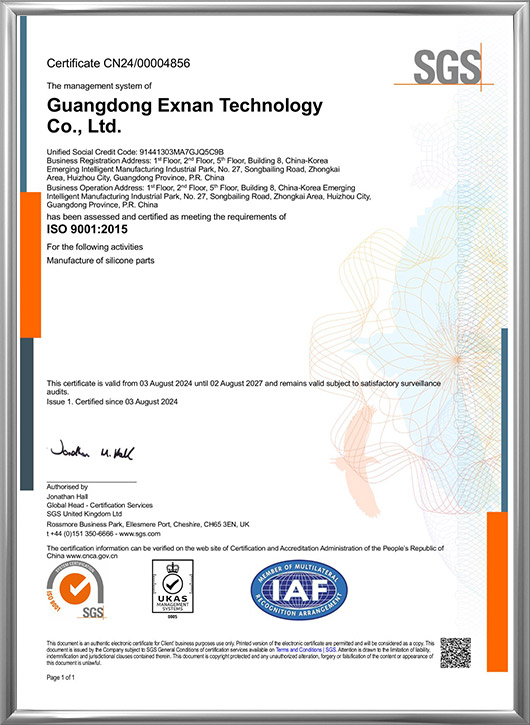
ISO 9001:2015
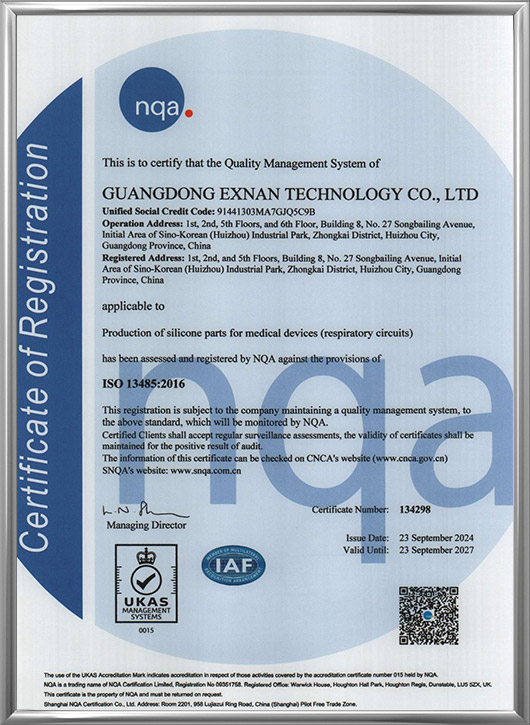
ISO 13485:2016
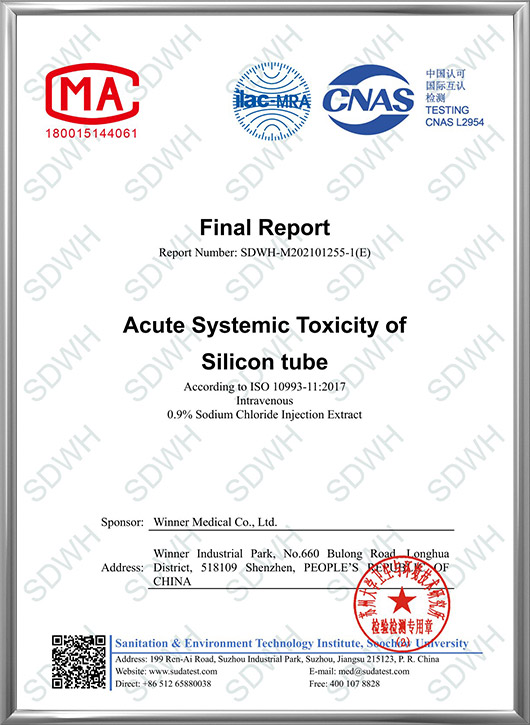
ISO 10993-11:2017 Tail vein injection
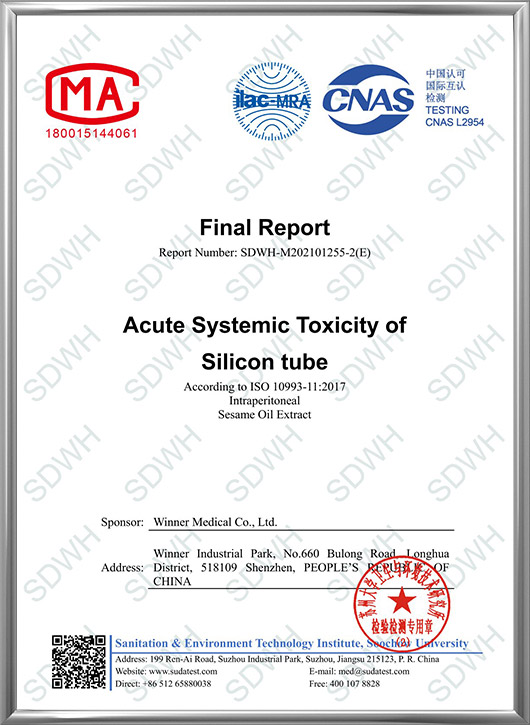
ISO 10993-11:2017 Intraperitoneal injection
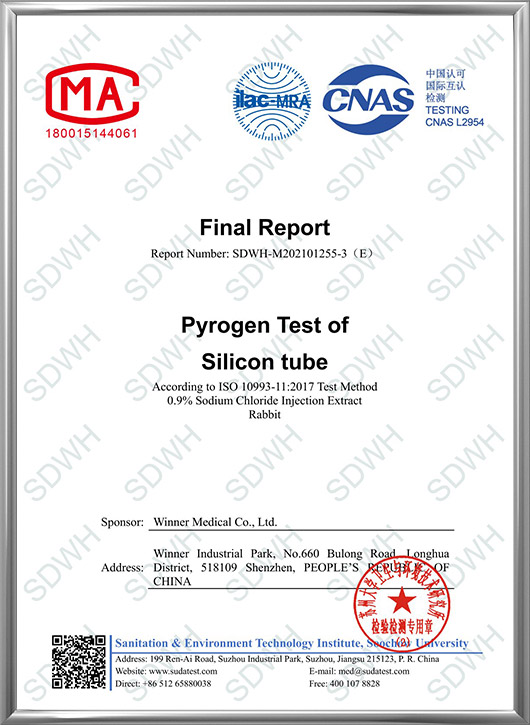
ISO 10993-11:2017 Pyrogens
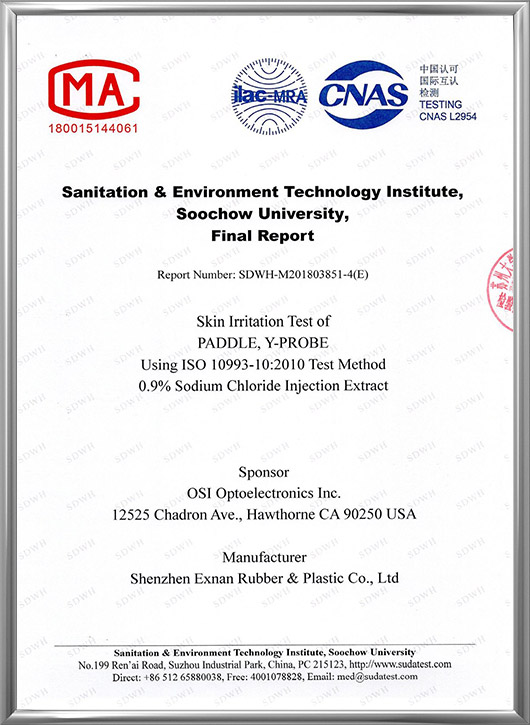
Skin irritation test for extract of 0.9% sodium chloride injection
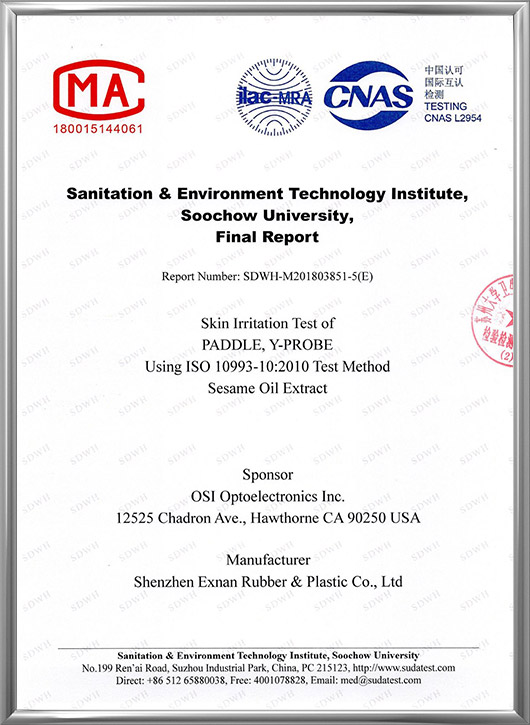
Skin irritation test for sesame oil extraction
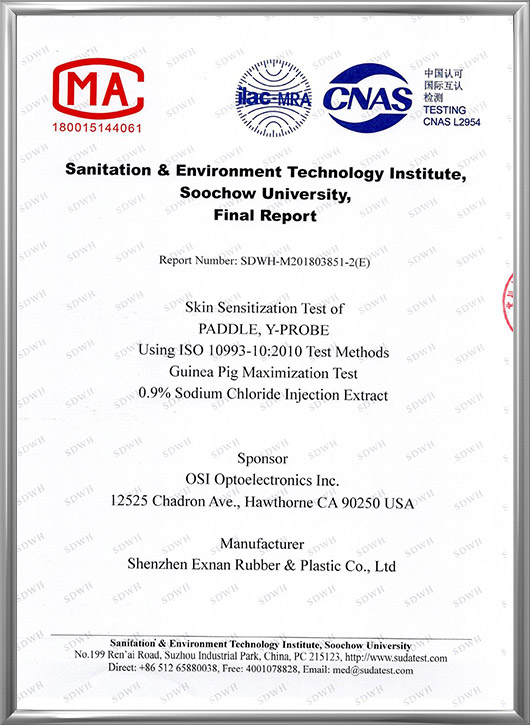
Skin sensitization test in guinea pigs using the maximization method with 0.9% sodium chloride injec
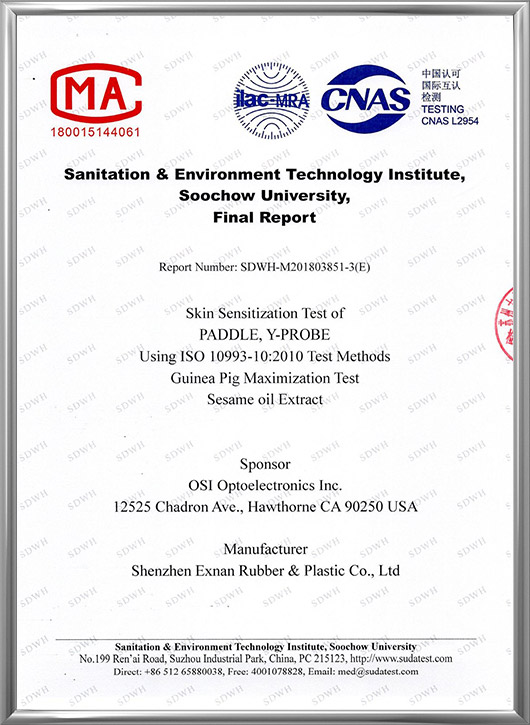
Skin sensitization test in guinea pigs:maximization method with sesame oil extraction
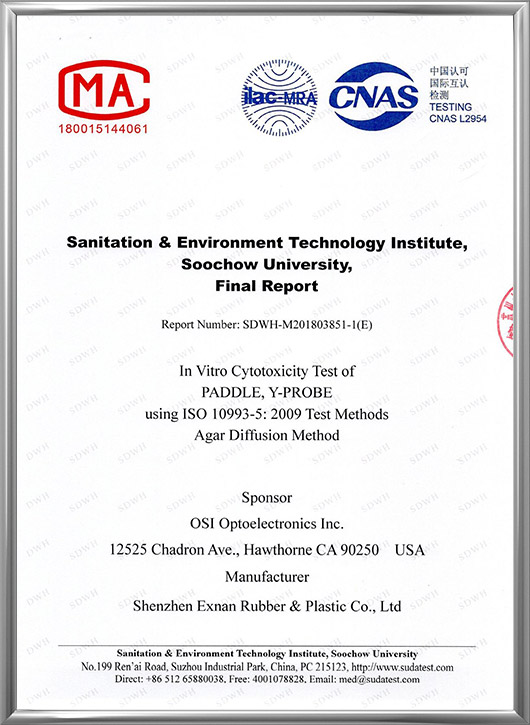
Cell toxicity test:agar diffusion method
Cooperating customers
Till now, Exnan products has been exports 35 countries, and more than 500 Medical equipment factory, health care companies, hospitals, clinics use our products, and win good reputation.


















New
Our silicone accessories meet international medical standards through strict quality control.
Ensure patient safety with our premium products. Explore our catalog today!
News
Our silicone accessories meet international medical standards through strict quality control.
Ensure patient safety with our premium products. Explore our catalog today!
Common Types and Uses of Silicone Parts in Medical Devices
Time: 2024-12-27 16:32:16
Author: Guangdong Exnan Technology Co.,Ltd
Click:
Silicone is a wonder material in the medical device industry. It's not just because it's flexible and durable; silicone also has excellent biocompatibility and chemical resistance, making it a go-to choice for a wide range of medical applications.

Introduction
Silicone is a wonder material in the medical device industry. It's not just because it's flexible and durable; silicone also has excellent biocompatibility and chemical resistance, making it a go-to choice for a wide range of medical applications. From simple seals to complex drug delivery systems, silicone plays a crucial role in ensuring patient safety and device performance. Let's dive into the different types of silicone parts and their common uses in medical devices.
1. Liquid Silicone Rubber (LSR)
- Definition and Properties
Liquid Silicone Rubber (LSR) is a low-viscosity material that can easily flow into molds. Its high flowability and low shrinkage make it perfect for injection molding. LSR cures quickly and completely, which allows for the production of intricate and detailed parts.
Properties:
- High Flowability: LSR can be injected into complex molds with minimal pressure.
- Low Viscosity: It spreads easily and fills even the smallest details.
- Low Shrinkage: The parts come out with minimal distortion.
- Rapid Curing: It can be cured in seconds, increasing production efficiency.
- Manufacturing Process
- Injection Molding Techniques: LSR is injected into a mold, where it quickly cures into a solid part. This process is highly automated and can handle both small and large-scale production.
- Scalability: From small-scale prototyping in 3D printers to high-volume industrial production, LSR can be used in various settings.
- Common Applications
- Complex and Detailed Parts: LSR is ideal for parts that need precise details, like valves and connectors.
- Medical Device Housings: The material's flexibility and strength make it suitable for device enclosures.
- Drug Delivery Systems: LSR is used in syringes, pumps, and other devices that need to deliver drugs accurately and safely.
Example:
- EXNAN's LSR components are widely used in drug delivery systems, ensuring reliable and biocompatible performance. More Info

2. High Consistency Rubber (HCR)
- Definition and Properties
High Consistency Rubber (HCR) is a more viscous and stronger form of silicone. It's perfect for high-strength applications, such as hoses and balloons, where durability and strength are crucial.
High Consistency Rubber (HCR) is a more viscous and stronger form of silicone. It's perfect for high-strength applications, such as hoses and balloons, where durability and strength are crucial.
Properties:
- Higher Viscosity: HCR is thicker and more stable, making it suitable for high-stress applications.
- Greater Strength: It can withstand higher pressures and mechanical stresses.
- Customizable: HCR can be tailored to meet specific performance criteria.
- Manufacturing Process
- Molding and Extrusion Techniques: HCR is typically molded or extruded into the desired shape. This process allows for the creation of strong and durable parts.
- Flexibility in Design: HCR can be easily customized to meet different requirements, from different durometers to specialized additives.
- Common Applications
- Pharmaceutical Transfer Hoses: HCR hoses are used to transfer liquids and gases in pharmaceutical manufacturing.
- Sealing and Gasketing: HCR is used in seals and gaskets to ensure watertight and airtight connections.
- Fluid Handling and Feeding Tubes: These tubes need to be flexible and resistant to chemicals, making HCR a perfect fit.
- High-Strength Balloons for Catheters: HCR balloons can inflate and deflate reliably, providing essential support in medical procedures.
Example:
- EXNAN offers a variety of HCR parts, including durable hoses and high-strength balloons. More Info

3. Silicone Adhesives
- Definition and Properties
Silicone adhesives are known for their excellent adhesion properties. They are available in one-part moisture cure and two-part addition cure systems, making them versatile for different applications.
Properties:
- Excellent Adhesion: They bond well with both silicone and other materials.
- Versatile Curing Systems: One-part systems cure with moisture, while two-part systems cure with heat or chemical reactions.
- Biocompatible: Silicone adhesives are safe for use in medical devices that come into contact with the body.
- Manufacturing Process
- Application Methods: Silicone adhesives can be applied using various techniques, such as spraying, dispensing, and brushing.
- Curing Processes: The curing process can be adjusted to fit different production needs, from room temperature to high-temperature curing.
- Common Applications
- Bonding Silicone to Silicone and Other Medical Substrates: These adhesives are used to bond different parts of a device together.
- Medical Tapes and Wound Care Products: Silicone adhesives provide a gentle yet strong bond to the skin, making them ideal for wound care.
- Transdermal Drug Delivery Patches: These patches need to adhere to the skin for extended periods, and silicone adhesives ensure they stay in place.
Example:
- EXNAN's silicone adhesives are used in a wide range of medical devices, ensuring strong and biocompatible bonds. More Info

4. Room Temperature Vulcanizing (RTV) Silicones
- Definition and Properties
RTV silicones are two-part systems that cure at room temperature. They produce soft and durable elastomers, making them ideal for applications that require flexibility and long-term use.
Properties:
- Two-Part System: RTV silicones are mixed just before use, allowing for custom formulations.
- Soft and Durable Elastomers The cured material is flexible and can withstand repeated use.
- Biocompatible: RTV silicones are safe for use in devices that come into contact with the body.
- Manufacturing Process
- Mixing and Curing Techniques: The two parts are mixed in the correct ratio and then allowed to cure at room temperature.
- Custom Formulations: The material can be adjusted to meet specific application requirements.
- Common Applications
- Prosthetic Liners: RTV silicones are used in prosthetic liners to ensure a comfortable and secure fit.
- Orthotic Inserts: These inserts need to be flexible and durable, and RTV silicones provide the necessary properties.
- Bandages and Shoe Insoles: RTV silicones are used in bandages and insoles to provide cushioning and support.
Example:
- EXNAN's RTV silicone products are used in prosthetics and orthotics, providing patients with comfortable and reliable solutions. More Info
5. Silicone Gels and Fluids
- Definition and Properties
Silicone gels and fluids are very soft elastomers and PDMS-based products. They are often used in applications where a smooth and lubricious surface is needed.
Properties:
- Very Soft Elastomers: Silicone gels are extremely flexible and conform to different shapes.
- PDMS-Based Fluids and Emulsions: These fluids are used for their lubricating properties and can be adjusted for viscosity.
- Biocompatible: Silicone gels and fluids are safe for use in medical devices that come into contact with the body.
- Manufacturing Process
- Coating and Lubrication Techniques: Silicone gels and fluids can be applied to surfaces using various methods, such as dip coating and spray coating.
- Adjustable Viscosity: The viscosity can be modified to fit different application needs.
- Common Applications
- Cushions and Breast Forms: Silicone gels provide a natural feel and comfort.
- Coating and Lubrication of Parenteral Packaging Components: These fluids ensure that components move smoothly without sticking.
- Surgical Tools and Instruments: Silicone fluids are used to lubricate and coat surgical tools, enhancing their performance.
Example:
- EXNAN's silicone gels and fluids are used in surgical instruments to improve their handling and reduce friction. More Info

6. Integrated Use in Wearable Medical Devices
- Challenges in Design and Manufacturing
- Multiple Components: Wearable medical devices often require parts with different properties.
- Versatile Materials: The need for materials that can meet all the required performance criteria is critical.
- Benefits of Silicone
- Broad Range of Technologies: Silicone materials like LSR, HCR, and RTV can be combined to create versatile devices.
- Ease of Processing: Silicone materials are easy to process and can be customized for different applications.
- Improved Productivity: The rapid curing and high durability of silicone materials enhance production efficiency.
- Case Study
- Example of a Wearable Medical Device: Consider a wearable insulin pump that combines LSR for the housing, HCR for the delivery tube, and RTV for the adhesive that bonds the pump to the skin.
- How Each Type of Silicone Addresses Specific Needs:
- LSR Housing: Provides a strong and flexible enclosure.
- HCR Delivery Tube: Ensures the tube can withstand the pressure and mechanical stresses of daily use.
- RTV Adhesive: Keeps the pump firmly attached to the skin without causing irritation.
Example:
- EXNAN's integrated silicone solutions have been instrumental in developing reliable wearable medical devices. More Info
Conclusion
- Summary of Key Points: Silicone parts are essential in medical devices due to their unique properties and versatility.
- Importance of Selecting the Right Silicone: Choosing the right type of silicone for a specific application is crucial for ensuring patient safety and device performance.
- Future Trends: The continued development of silicone materials and manufacturing processes will likely lead to even more innovative and effective medical devices in the future.
References
- Sources and Further Reading:
- "Silicone for Medical Applications," Elkem Silicones. Link
- "Biocompatibility and Performance of Liquid Silicone Rubber," Dow Corning. Link
- "High Consistency Rubber in Medical Devices," Momentive Performance Materials. Link
- "RTV Silicone in Medical Applications," Bluestar Silicones. Link
- "Silicone Gels and Fluids for Medical Devices," Shin-Etsu Chemical. Link

点击右上角
分享给朋友吧







 Long by picture save/share
0
Prev : Ensuring Patient Safety with Medical Device Silicone Parts
Next : Common Types and Uses of Silicone Parts in Medical Devices
文章推荐
Medical Silicone vs. TPE/TPU: Why Is Silicone Still the Preferred Material for Medical Consumables?
Medical Silicone Mold Design: The First Gateway to Product Precision
New Requirements of ISO13485:2016 for Medical Silicone Suppliers
Medical Silicone Consumables Market Sees New Growth: Respiratory Equipment Drives Demand for Precision Components
From Concept to Compliant Mass Production – EXNAN’s One‑Stop Custom Implantable Silicone Components Service
Related news recommendations —
Related Products —



News Products —
INQUIRY


Add Successfully

Hey there, I’m Steve!
15+ years in medical silicone accessories, linking manufacturers and healthcare providers for compliant, high-quality products. Trusted advisor focused on innovation and patient care. If you are looking for custom-made silicone rubber products, feel free to ask me any questions.
Hey there, I’m Steve!
15+ years in medical silicone accessories, linking manufacturers and healthcare providers for compliant, high-quality products. Trusted advisor focused on innovation and patient care. If you are looking for custom-made silicone rubber products, feel free to ask me any questions.
Welcome to contact us
If you have any questions, please fill in the relevant information. Weare very willing to provide more information and a full range ofservices for both you and your company
Welcome to contact us
If you have any questions, please fill in the relevant information. Weare very willing to provide more information and a full range ofservices for both you and your company
EXNAN
点击右上角
分享给朋友吧
Copyright © 2004-2024 Guangdong Exnan Technology Co.,Ltd
点击右上角
分享给朋友吧
Copyright © 2004-2024 Guangdong Exnan Technology Co.,Ltd

 +86-0752-3869959 / 3869960
 +86 180 0752 8206
 Building 8, China-Korea Emerging Intelligent Manufacturing Industrial Park, No.27, Songbailing Road, China-Korea (Huizhou) Industrial Park, Zhongkai Area, Huizhou City, Guangdong Province, China

WeChat scan
