

Contact Us
lf you have any queries, get in touch today! Don't hesitate, We try to take the extra step forour customer satisfaction.

Hey there, I’m Steve!
I’m the sales manager of exnan medical silicone. I have been in this field for more than ten years. If you are looking for custom-made silicone rubber products, feel free to ask me any questions.
"
Our certificate
Possess 800 square meters of Class 10,000 dust-free workshop, Passed ISO9001:2015 quality management system certification and ISO13485:2016 medical device quality management system, and its products have obtained multiple biocompatibility tests, US FDA and EU LFGB certifications.
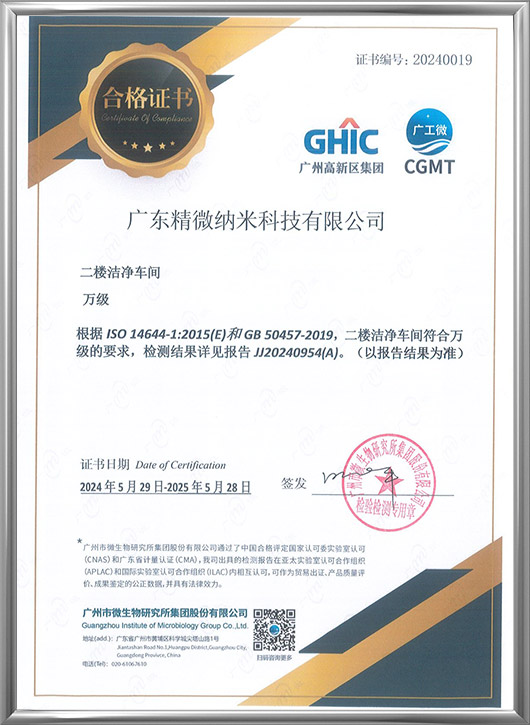
Class 10,000 cleanroom certification
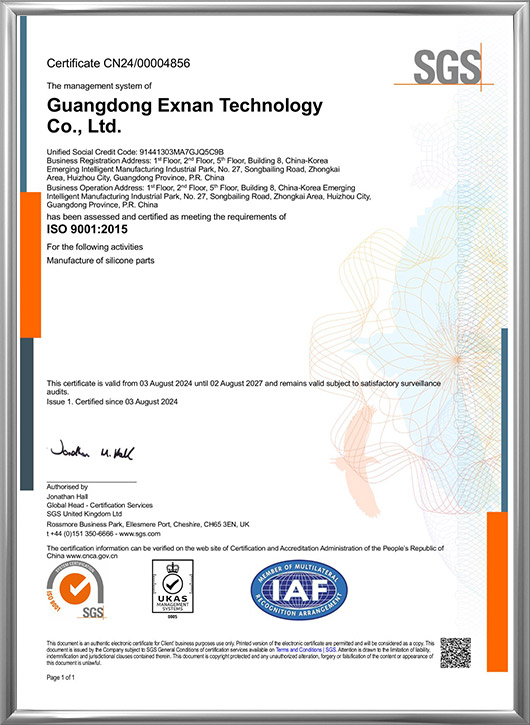
ISO 9001:2015
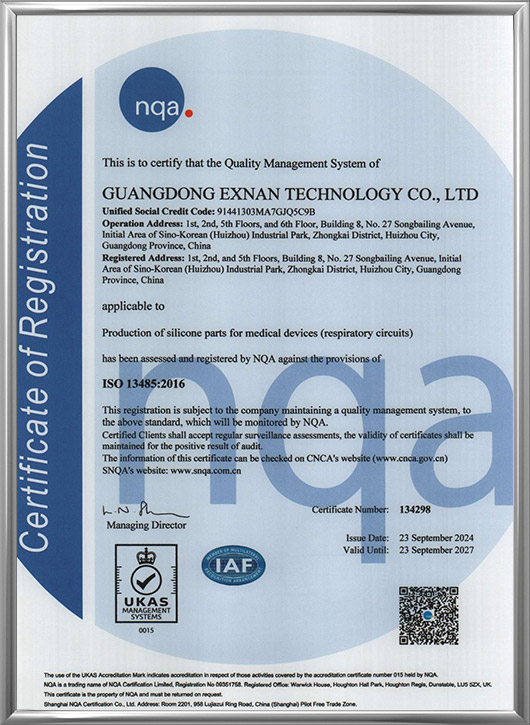
ISO 13485:2016
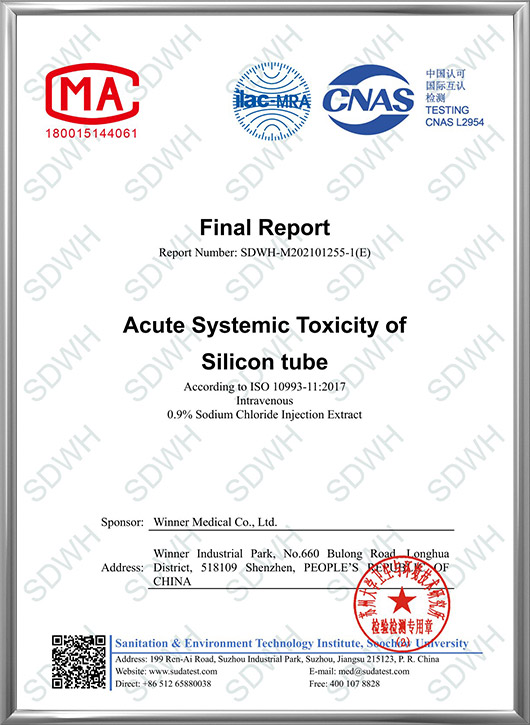
ISO 10993-11:2017 Tail vein injection
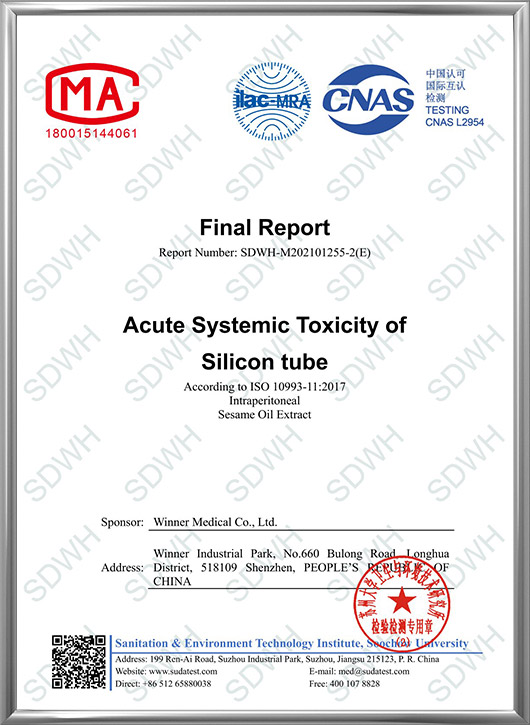
ISO 10993-11:2017 Intraperitoneal injection
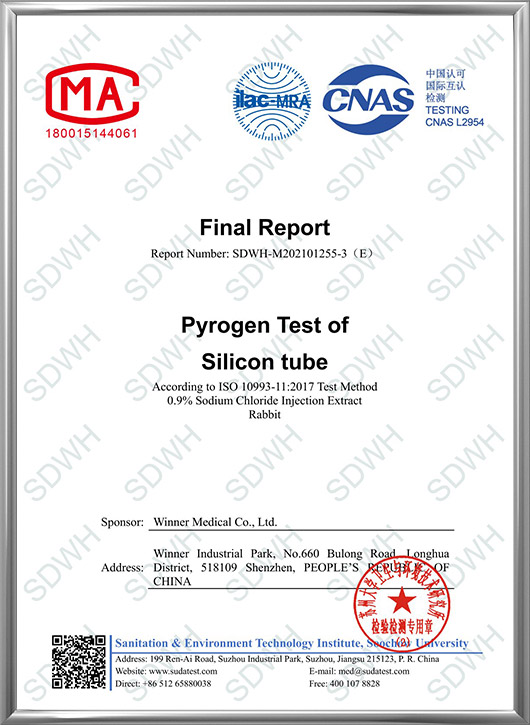
ISO 10993-11:2017 Pyrogens
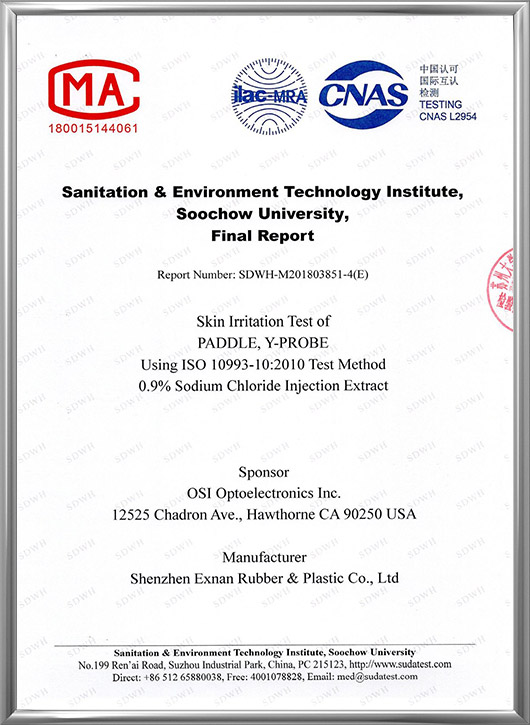
Skin irritation test for extract of 0.9% sodium chloride injection
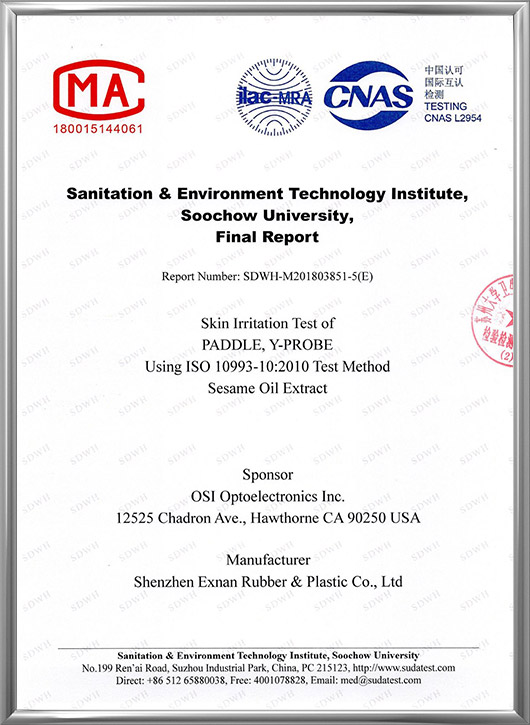
Skin irritation test for sesame oil extraction
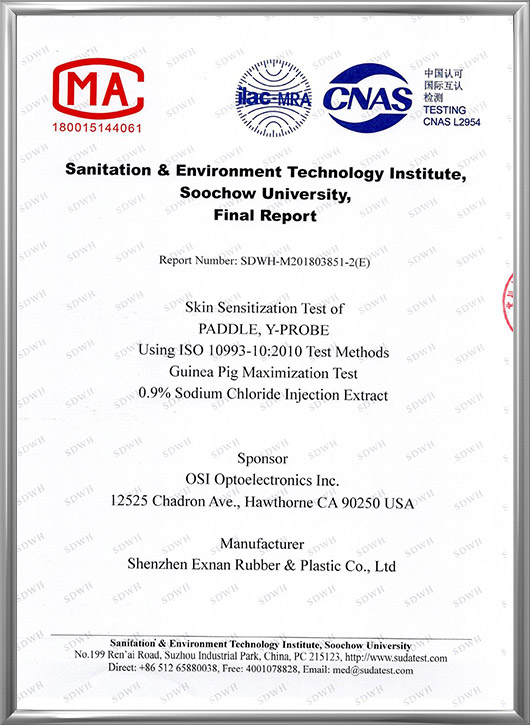
Skin sensitization test in guinea pigs using the maximization method with 0.9% sodium chloride injec
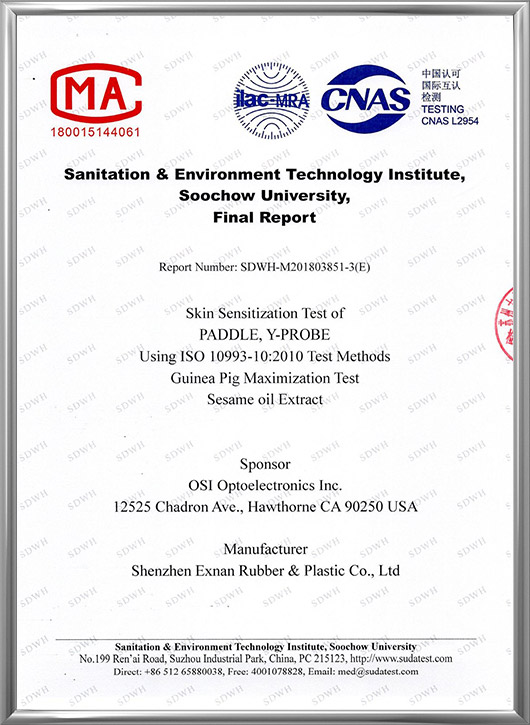
Skin sensitization test in guinea pigs:maximization method with sesame oil extraction
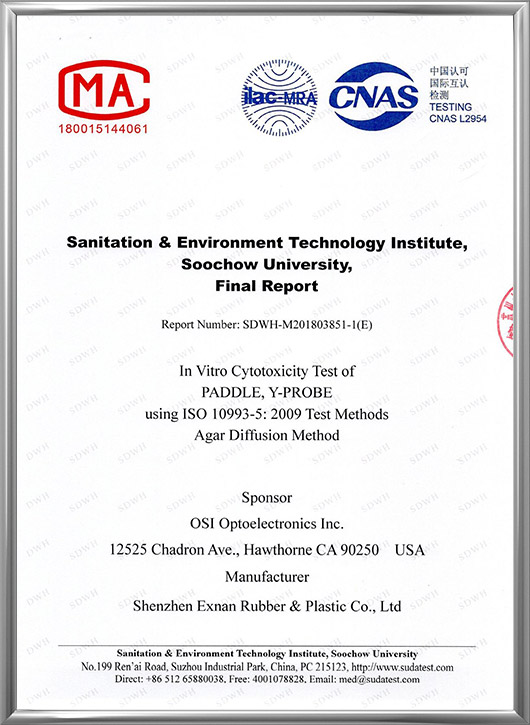
Cell toxicity test:agar diffusion method
Cooperating customers
Till now, Exnan products has been exports 35 countries, and more than 500 Medical equipment factory, health care companies, hospitals, clinics use our products, and win good reputation.



















New
Our silicone accessories meet international medical standards through strict quality control.
Ensure patient safety with our premium products. Explore our catalog today!
News
Our silicone accessories meet international medical standards through strict quality control.
Ensure patient safety with our premium products. Explore our catalog today!
How to Select High-Quality Silicone Parts for Medical Devices
Time: 2025-01-06 10:00:08
Author: Guangdong Exnan Technology Co.,Ltd
Click:
Hey there! If you're involved in the medical device industry, you know how crucial it is to get the right materials for your products. Silicone rubber is one of the go-to materials for a reason—it’s biocompatible, flexible, and durable. This article is going to break down the key factors you should consider when selecting high-quality silicone parts for your medical devices. Let's dive in!

1. Introduction
Hey there! If you're involved in the medical device industry, you know how crucial it is to get the right materials for your products. Silicone rubber is one of the go-to materials for a reason—it’s biocompatible, flexible, and durable. This article is going to break down the key factors you should consider when selecting high-quality silicone parts for your medical devices. Let's dive in!
2. Material Properties of Silicone Rubber
Silicone rubber isn't just any material. It has some unique properties that make it perfect for medical applications:
- Biocompatibility
- Silicone rubber is FDA-approved and widely used in medical devices because it doesn’t cause allergic reactions and is non-toxic.
- Why It Matters: For devices that come into contact with the human body, biocompatibility is a must. It ensures patient safety and regulatory compliance.
- Mechanical Characteristics
- Flexibility: Silicone rubber can bend and stretch without breaking, making it ideal for dynamic environments.
- Durability: It has a long shelf life and can withstand repeated use.
- Strength: Despite being flexible, it maintains structural integrity under pressure.
- Why It Matters: These properties ensure that your medical device performs consistently over time, even in challenging conditions.
- Chemical and Temperature Resistance
- Silicone rubber can handle a wide range of temperatures, from freezing cold to very hot.
- It’s resistant to many chemicals, including sterilization agents and bodily fluids.
- Why It Matters: This resistance is crucial for devices that need to be sterilized frequently or used in harsh environments.
- Processing Flexibility
- Silicone can be manufactured using various processes, such as extrusion, molding, and assembly.
- Why It Matters: This versatility allows you to choose the most suitable production method for your specific device, optimizing both cost and performance.
| Property | Description | Why It Matters |
| Biocompatibility | FDA-approved, non-toxic, and hypoallergenic | Ensures patient safety and regulatory compliance |
| Flexibility | Bends and stretches without breaking | Ideal for dynamic environments |
| Durability | Long shelf life and withstands repeated use | Consistent performance over time |
| Chemical Resistance | Resists many chemicals, including sterilization agents | Suitable for frequent sterilization and harsh environments |
| Temperature Resistance | Maintains properties over a wide temperature range | Versatility in different usage scenarios |
| Processing Flexibility | Can be extruded, molded, and assembled | Optimizes cost and performance |

3. Design and Engineering Support
Having the right design and engineering support is just as important as choosing the right material. Here’s what to look for:
- Experienced Engineering Team
- An experienced engineering team can help refine your design to make it more efficient and cost-effective.
- Why It Matters: They can identify potential issues before they become problems, saving you time and money.
- Custom Tooling
- Custom tooling is essential for producing unique parts that fit your device perfectly.
- Why It Matters: It ensures that the final product meets your exact specifications.
- Prototyping Methods
- 3D Printing: Fast and cost-effective for initial prototypes.
- Injection Molding: Great for mid to high-volume production.
- Extrusion: Ideal for creating long, continuous parts.
- Why It Matters: Different prototyping methods allow you to test and refine your design more efficiently.
- Secondary Operations
- Silk-Screening: Adds text or graphics to the parts.
- Slitting: Cuts parts to specific dimensions.
- Punching: Creates holes or cutouts.
- Beveling: Adds angled edges for smoother transitions.
- Bundling: Groups parts together for easier handling.
- Why It Matters: These operations can enhance the functionality and usability of your medical device.
4. Materials Expertise
Selecting the right silicone compound is a critical step:
- Silicone Compound Selection
- Different applications may require different types of silicone rubber.
- Why It Matters: The right compound ensures optimal performance and compliance with medical standards.
- Supplier Partnerships
- Work with fabricators who have strong relationships with silicone material suppliers.
- Why It Matters: This can ensure a consistent supply of high-quality materials and better price negotiations.
- Physical Specifications Evaluation
- Engineers should evaluate the physical specifications of the product to ensure it meets the required standards.
- Why It Matters: This step helps prevent any performance issues down the line.
- Process Parameter
- Determining the best process parameters for manufacturing high-quality silicone parts.
- Why It Matters: Optimized parameters can improve efficiency and reduce defects.

5. Manufacturing Capabilities
Your fabricator’s manufacturing capabilities can make or break your project:
- Quality System Compliance
- Ensure the fabricator’s facilities comply with quality system regulations, such as ISO 13485.
- Why It Matters: Compliance is crucial for meeting regulatory requirements and ensuring the highest quality standards.
- Production Flexibility
- The ability to handle both short and long production runs, as well as low and high volumes.
- Why It Matters: Flexibility allows you to adapt to changing market demands.
- Advanced Equipment
- LIM (Liquid Injection Molding): Ideal for producing complex and precise parts.
- Extrusion Equipment: Necessary for creating long, continuous parts.
- Why It Matters: Advanced equipment can improve accuracy and consistency in production.
- Additional Manufacturing Services
- Assembly: Putting the parts together.
- Washing: Ensuring the parts are clean and sterile.
- Packaging: Preparing the parts for shipping and storage.
- Controlled Environment: A cleanroom environment for maintaining hygiene.
- Why It Matters: These services can simplify your supply chain and ensure that the parts are ready to use right out of the box.
6. Quality Assurance
Quality assurance is non-negotiable in the medical device industry:
- Audited Quality Control
- Audited quality control practices ensure that every step of the manufacturing process meets the highest standards.
- Why It Matters: Regular audits help catch and correct issues early.
- Inspection Equipment
- Advanced inspection tools like video microscopes and laser micrometers are essential.
- Why It Matters: These tools can detect even the smallest defects, ensuring the parts meet your specifications.
- Testing Procedures
- Raw-Material Testing: Verifying the quality of the silicone rubber before production.
- In-Process Inspection: Checking the parts at various stages of production.
- Statistical Process Control: Monitoring production data to identify trends and improve processes.
- End-Product Testing: Final inspection to ensure the parts are fit for use.
- Why It Matters: Comprehensive testing ensures that your medical device is reliable and safe.
- 100% Inspection/Testing
- Some applications may require 100% inspection or testing.
- Why It Matters: In critical applications, leaving nothing to chance is important.

7. Cost-Effectiveness Considerations
While quality is paramount, cost-effectiveness is also a consideration:
- Initial Material Cost
- Silicone rubber can be more expensive than other elastomers, but it often provides better value in the long run.
- Why It Matters: Initial cost is just one part of the equation.
- Long-Term Savings
- Potential savings from tooling, prototyping, and manufacturing efficiencies.
- Why It Matters: Efficient processes can reduce overall costs and speed up time to market.
- Total Cost of Ownership
- Evaluate the total cost of ownership to make a comprehensive cost analysis.
- Why It Matters: Considering the entire lifecycle cost helps you make a more informed decision.
| Cost Factor | Description | Why It Matters |
| Initial Material Cost | Higher upfront cost but better long-term value | Balances initial expense with long-term benefits |
| Long-Term Savings | Savings from efficient manufacturing processes | Reduces overall costs and speeds up production |
| Total Cost of Ownership | Comprehensive analysis of the entire lifecycle cost | Informed decision-making for better value |
8. Vendor Selection Criteria
Choosing the right vendor is a critical step in ensuring high-quality silicone parts:
- Engineering and Design Support
- Criteria: Strong design and engineering capabilities, ability to refine and improve your design.
- Why It Matters: Good support can make your project more successful.
- Materials Expertise
- Criteria: Knowledge of different silicone compounds and their properties, strong relationships with suppliers.
- Why It Matters: Ensures you get the right materials for your application.
- Manufacturing Capabilities
- Criteria: Compliance with quality regulations, production flexibility, advanced equipment, and additional manufacturing services.
- Why It Matters: Comprehensive capabilities ensure high-quality, reliable parts.
- Quality Assurance
- Criteria: Audited quality control processes, use of advanced inspection tools, and thorough testing procedures.
- Why It Matters: Quality assurance is essential for medical devices.
- Customer Service and Support
- Criteria: Excellent communication, responsiveness, and ongoing support.
- Why It Matters: Good customer service can make your life much easier.

9. Case Studies and Examples
Let’s look at some real-world examples to see how high-quality silicone parts have made a difference:
- Successful Projects
- Case Study 1: EXNAN’s work on a silicone catheter for a leading medical device manufacturer. The custom tooling and advanced inspection techniques ensured a defect-free product.
- Case Study 2: A silicone gasket for a surgical instrument that required precise dimensions and chemical resistance. EXNAN’s LIM equipment and quality control processes delivered a high-performance part.
- Challenges and Solutions
- Challenge 1: Maintaining consistency in high-volume production.
- Solution: Implementing statistical process control and regular audits.
- Challenge 2: Ensuring biocompatibility in a new application.
- Solution: Conducting thorough material testing and working closely with the manufacturer’s engineering team.
Read more about EXNAN’s case studies and success stories here.
10. Conclusion
So, there you have it! When selecting high-quality silicone parts for your medical devices, consider the material properties, design and engineering support, materials expertise, manufacturing capabilities, quality assurance, and cost-effectiveness. Partnering with a reputable and capable fabricator like EXNAN can make all the difference. They have the expertise, equipment, and commitment to quality that you need to bring your medical device to market successfully.
Final Thoughts
Medical devices are all about reliability and safety. Don’t cut corners when it comes to your silicone parts. By following these guidelines and working with a trusted partner like EXNAN, you can ensure that your device performs at its best, every single time.
Bibliography
- Articles:
- "The Benefits of Silicone in Medical Device Manufacturing," Medical Design Briefs, 2022.
- "How to Choose the Right Silicone Compound for Your Medical Device," Medical Plastics News, 2023.
- Books:
- "Materials for Medical Devices," edited by John K. Zalum, 2024.
- "Quality Management in Medical Device Manufacturing," by Maryann Liebert, 2025.
Explore more on the EXNAN website.
I hope this article helps you make the right choices for your medical device project! If you have any questions or need more information, feel free to reach out to us at EXNAN. We’re here to help!

点击右上角
分享给朋友吧







 Long by picture save/share
0
Prev : Common Types and Uses of Silicone Parts in Medical Devices
Next : Manufacturing Process and Quality Control for Medical Device Silicone Parts
文章推荐
Medical Silicone vs. TPE/TPU: Why Is Silicone Still the Preferred Material for Medical Consumables?
Medical Silicone Mold Design: The First Gateway to Product Precision
New Requirements of ISO13485:2016 for Medical Silicone Suppliers
Medical Silicone Consumables Market Sees New Growth: Respiratory Equipment Drives Demand for Precision Components
From Concept to Compliant Mass Production – EXNAN’s One‑Stop Custom Implantable Silicone Components Service
Related news recommendations —
Related Products —



News Products —
INQUIRY


Add Successfully

Hey there, I’m Steve!
15+ years in medical silicone accessories, linking manufacturers and healthcare providers for compliant, high-quality products. Trusted advisor focused on innovation and patient care. If you are looking for custom-made silicone rubber products, feel free to ask me any questions.
Hey there, I’m Steve!
15+ years in medical silicone accessories, linking manufacturers and healthcare providers for compliant, high-quality products. Trusted advisor focused on innovation and patient care. If you are looking for custom-made silicone rubber products, feel free to ask me any questions.
Welcome to contact us
If you have any questions, please fill in the relevant information. Weare very willing to provide more information and a full range ofservices for both you and your company
Welcome to contact us
If you have any questions, please fill in the relevant information. Weare very willing to provide more information and a full range ofservices for both you and your company
EXNAN
点击右上角
分享给朋友吧
Copyright © 2004-2024 Guangdong Exnan Technology Co.,Ltd
点击右上角
分享给朋友吧
Copyright © 2004-2024 Guangdong Exnan Technology Co.,Ltd

 +86-0752-3869959 / 3869960
 +86 180 0752 8206
 Building 8, China-Korea Emerging Intelligent Manufacturing Industrial Park, No.27, Songbailing Road, China-Korea (Huizhou) Industrial Park, Zhongkai Area, Huizhou City, Guangdong Province, China

WeChat scan
